Home Planet Fund: You mentioned there was a conflict resolution effort in Loliondo. Can you tell us more about what happened and how UCRT approached it?
Makko Sinandei: The government had failed to resolve a conflict between two Maasai villages in Loliondo. They came to us: “Can you support us?” I said yes. Knowing the conflict was tense, I had two objectives. The first was to resolve the conflict. The second, which I could not say aloud, was to build solidarity among the communities, because this conflict had actually been caused by eviction. The communities were squeezed into a very small area because their land had been taken, and they were fighting over grazing. I could not tell the government that, because the government was the one who caused the eviction.
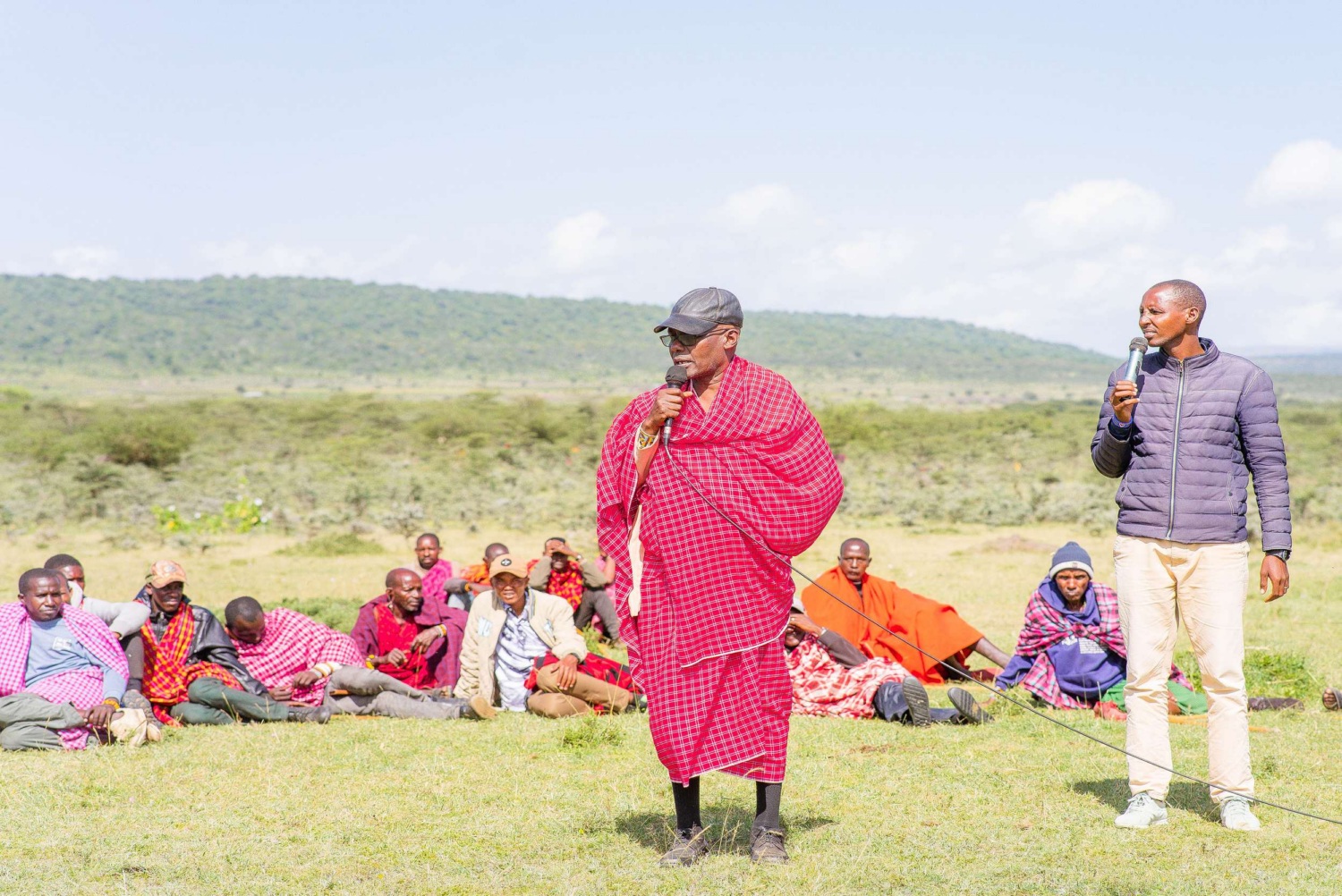
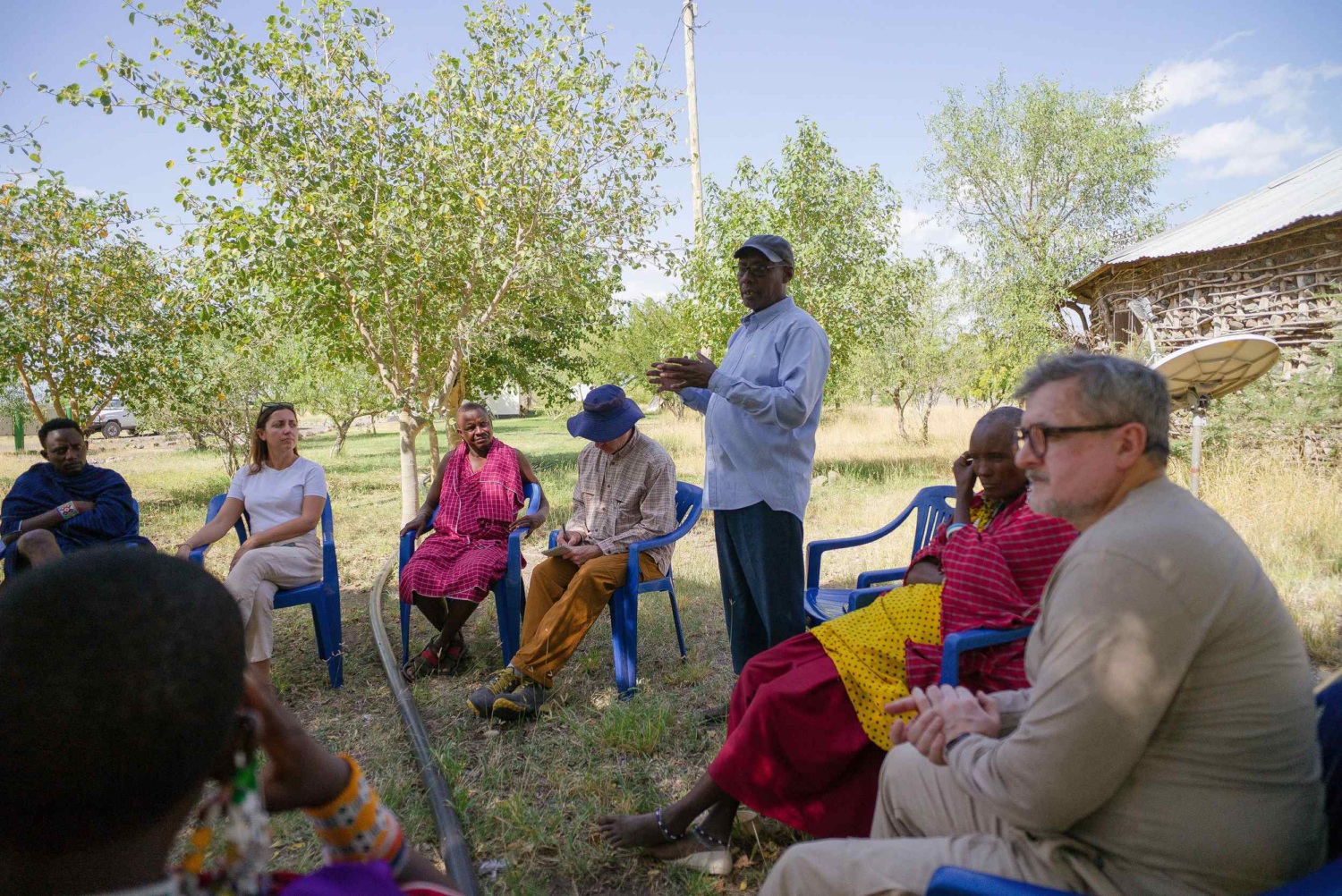
So we brought people together, around sixty to eighty customary leaders from across the Ngorongoro Conservation Area and surrounding villages. We met for almost three months. We settled the conflict, but we also went further by creating discussions about the broader situation of the Maasai, about the Ngorongoro evictions, about livelihoods. We created hope in a moment when people were losing it. Leaders from different villages began coordinating. The message to the community became: “This conflict did not happen because you dislike each other. It happened because of land pressure. Let us work together.”
The community shifted completely. They moved from wanting a boundary line enforced to wanting peace, with a boundary they could agree on themselves, through continued discussion. This outcome would not have been possible without the funding from Home Planet Fund. Managing sixty to eighty leaders for three months, guest house costs, transport, food…was intensive. But the impact was enormous. The government also came to trust us more through this process. And it opened a real strategic window in Loliondo, which had previously been very difficult to work in.
HPF: What is UCRT’s wider national and international advocacy strategy?
Makko Sinandei: We are working with PINGO’s Forum (Pastoralists Indigenous Non-Governmental Organizations Forum, and a Home Planet Fund partner) and the Tanzania Land Alliance to create a platform for the Maasai and pastoralists across Tanzania to collectively reshape government policy on land tenure and natural resource management. This is a large challenge, and we cannot do it alone. We need a platform at scale.
At the international level, I went to IUCN’s [International Union for Conservation of Nature] office in Nairobi and asked them directly: “Back us up. You do not need to come to the front. Just quietly advise the Ministry of Natural Resources and Tourism about managing natural resources and the rights of Indigenous people.” The power imbalance between communities and the Ministry is real. We need someone pushing from a different position. IUCN has begun engaging the Ministry on these issues, and there is potential for change. But what we need from them is not just money…we need them to influence the Ministry and recognize that Indigenous knowledge in natural resource management is not a cultural curiosity. It is a global right with measurable ecological outcomes.
If policy changes at that level, whatever money we receive becomes far more effective. Right now we are using funding to solve problems that are partly caused by the very policies of our funders. The colonial conservation model separates Indigenous people from conservation, and that is the root of the land grabbing we are fighting. Change the policy, and the ground-level work becomes sustainable.
HPF: Can you tell us about UCRT’s work with the Hadza community in Yaeda Chini?
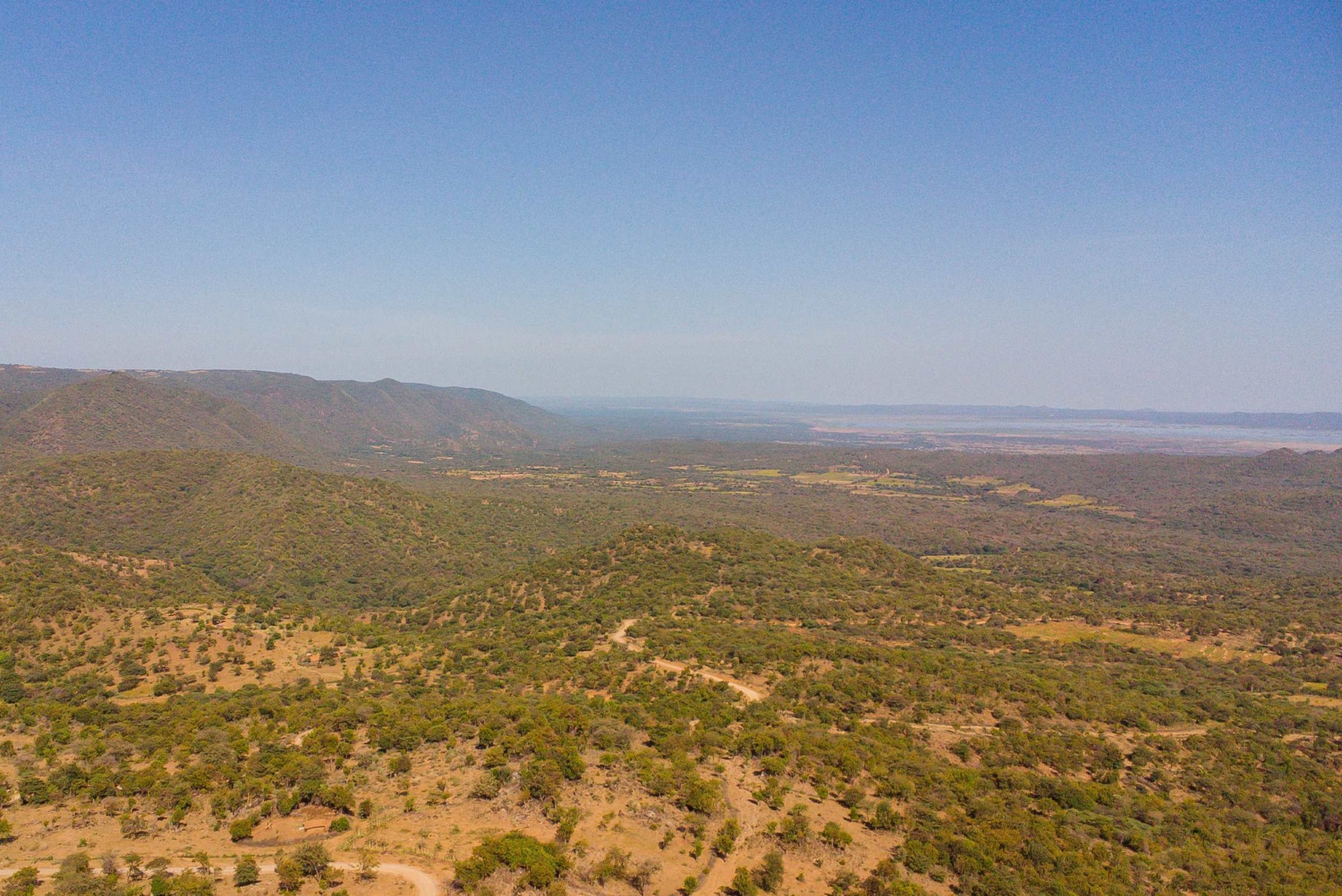
Makko Sinandei: The Hadza are a small minority group of hunter-gatherers who move through the landscape collecting honey and food. Our role is to secure tenure for their territory so they can always come back. What has been happening is that their land gets occupied while they are away, by pastoral groups and by farmers. They return and find themselves pushed out. By securing that territory, we ensure that wherever they go, when they come back, the land is there. That is the foundation of everything. They can change over time. Their livelihoods can adapt. But the land must be there first.
We are also watching the carbon business in that area carefully. For now, we have not seen major negative effects on the Hadza from carbon projects. But for the Maasai, soil carbon has already become a real threat. It is bringing money but also significant restrictions on movement and land use. We are still working through how to address those risks. Carbon is an opportunity for income, but the restrictions it brings can be another form of taking land away from people who depend on mobility to survive.
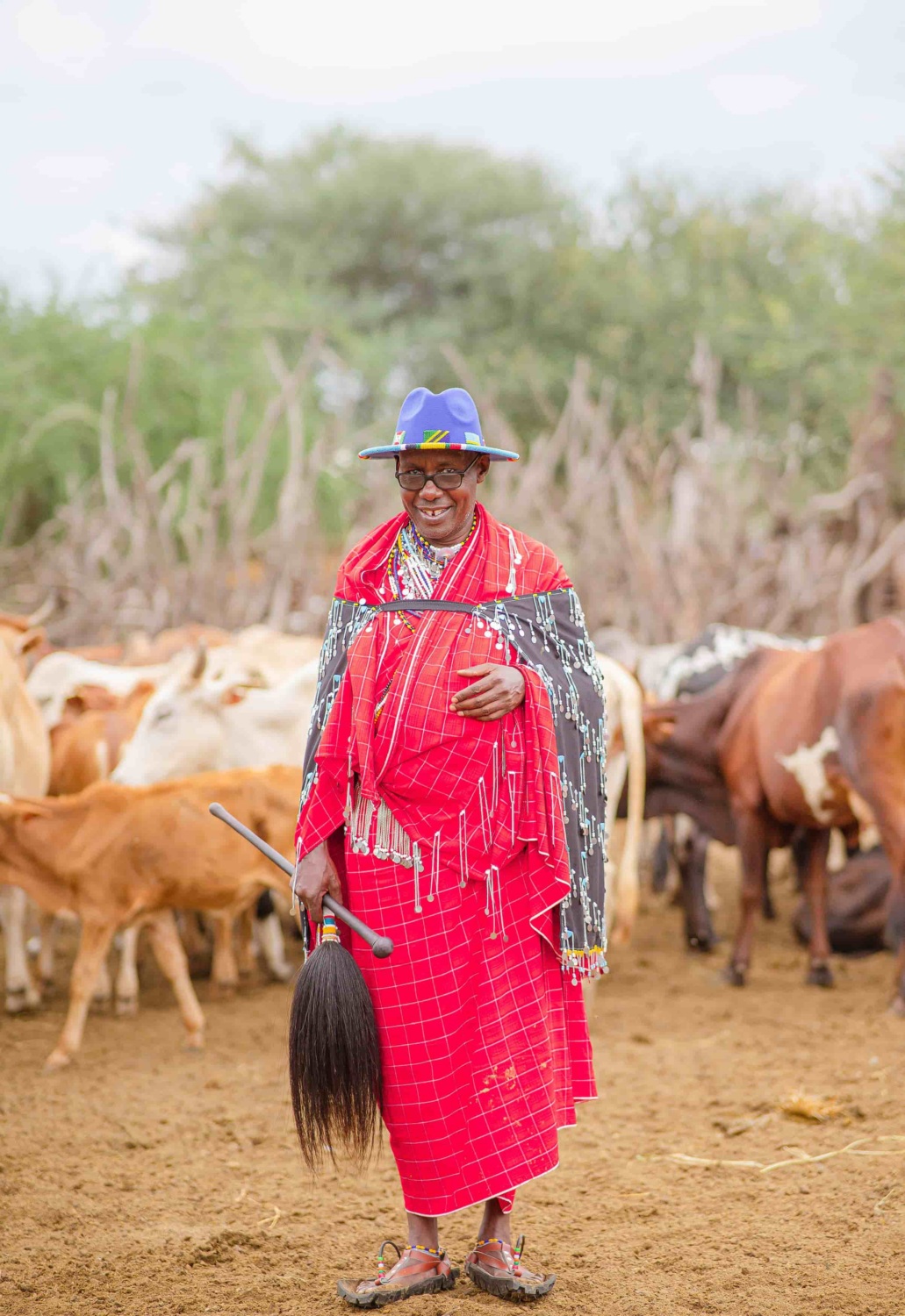
HPF: You mentioned the challenge of corruption when communities are approached with money for carbon deals. Can you expand on that?
Makko Sinandei: When a community has already been destroyed by climate change, when they do not have options, when they cannot be certain they will eat tomorrow, and someone comes with money, they take it. They have no choice. You put money in their accounts, their child goes to school, they get food. Of course they say yes. We call this a form of corruption…not of the person, but of the idea. You corrupt the idea by exploiting desperation. The community does not give free, informed consent. They give survival consent.
What is needed is a neutral party that can stand between communities and carbon project developers. Someone who can bring genuine balance and ensure that communities understand not just what they are gaining today, but what they are giving up for the next thirty years. UCRT tries to play this role, but we need more backing. Our land is virgin. Our natural resources are intact. Our wildlife is still there. Every investor, every government interest, every carbon developer is moving toward us. Our capacity to manage all of that pressure and develop a real strategy is still growing. We need to build a movement with our communities, with our professionals, to ensure we do not lose everything.