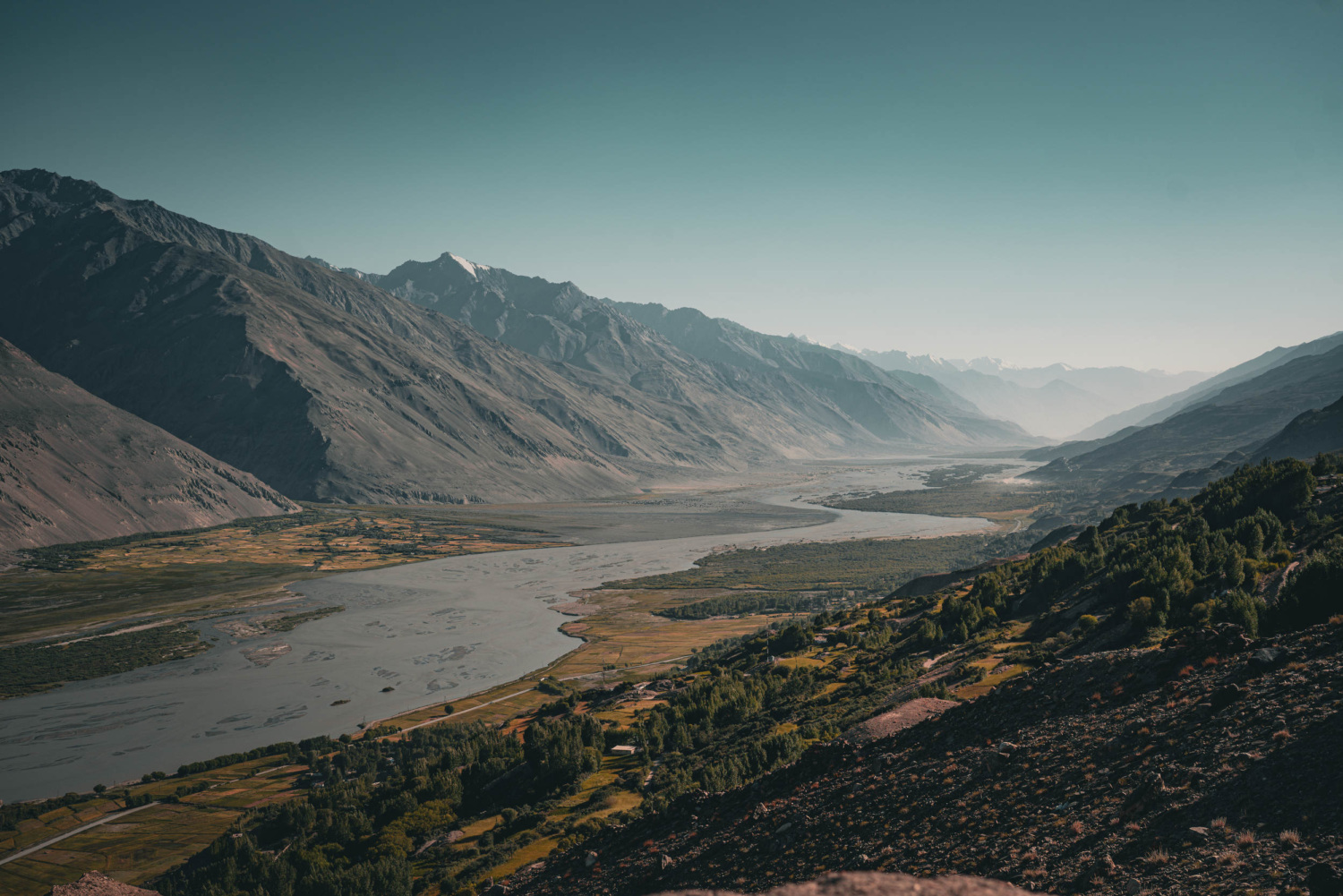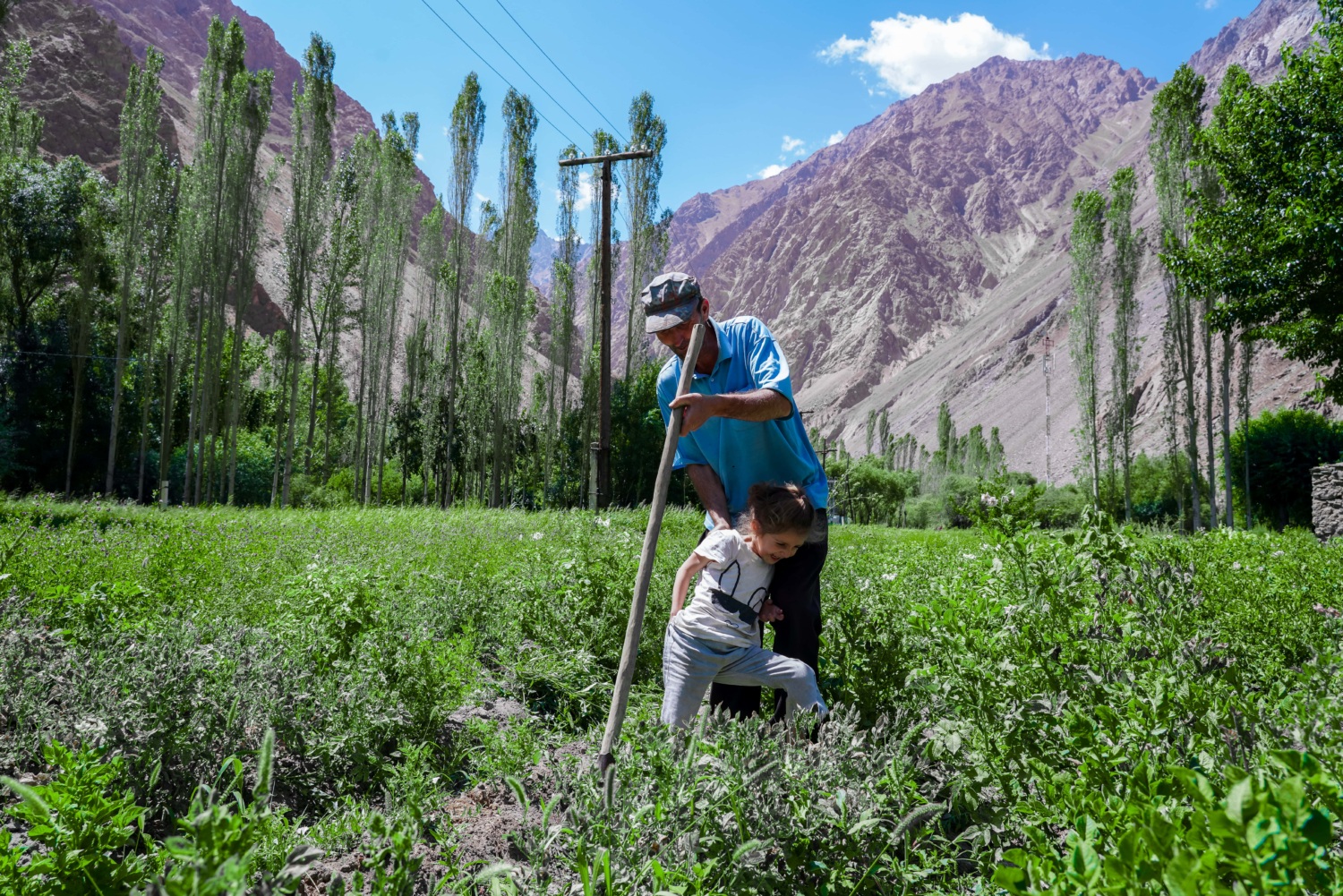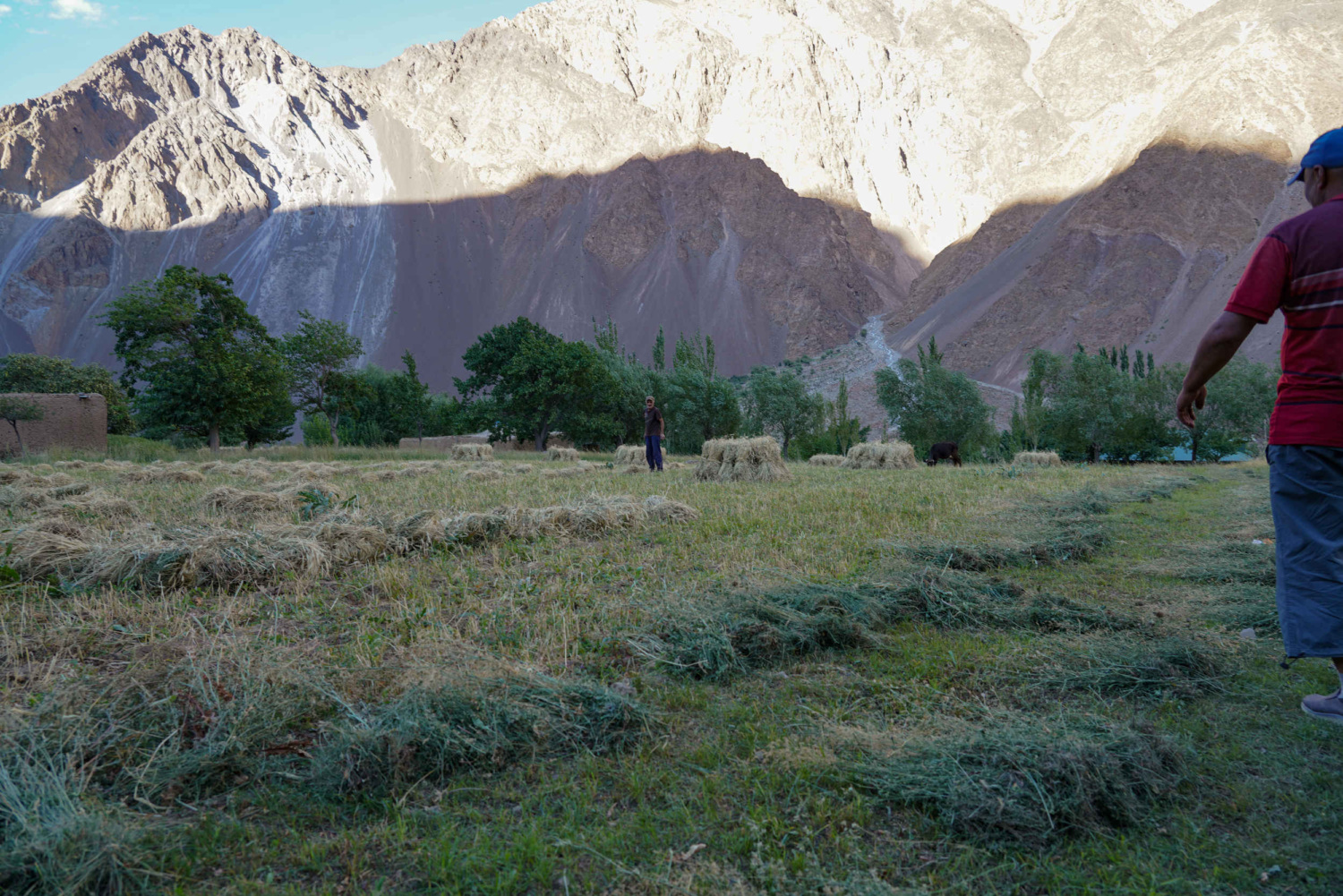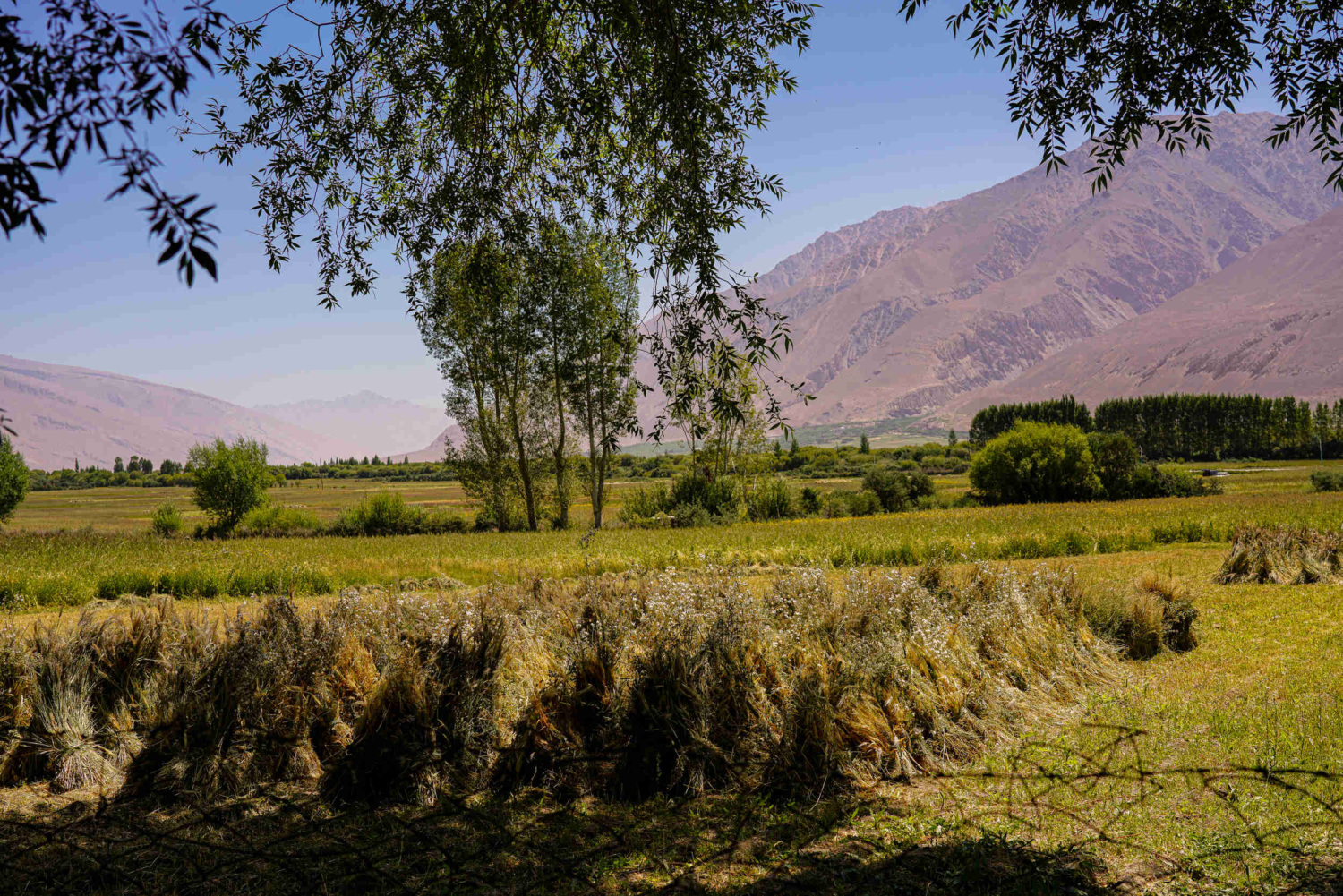
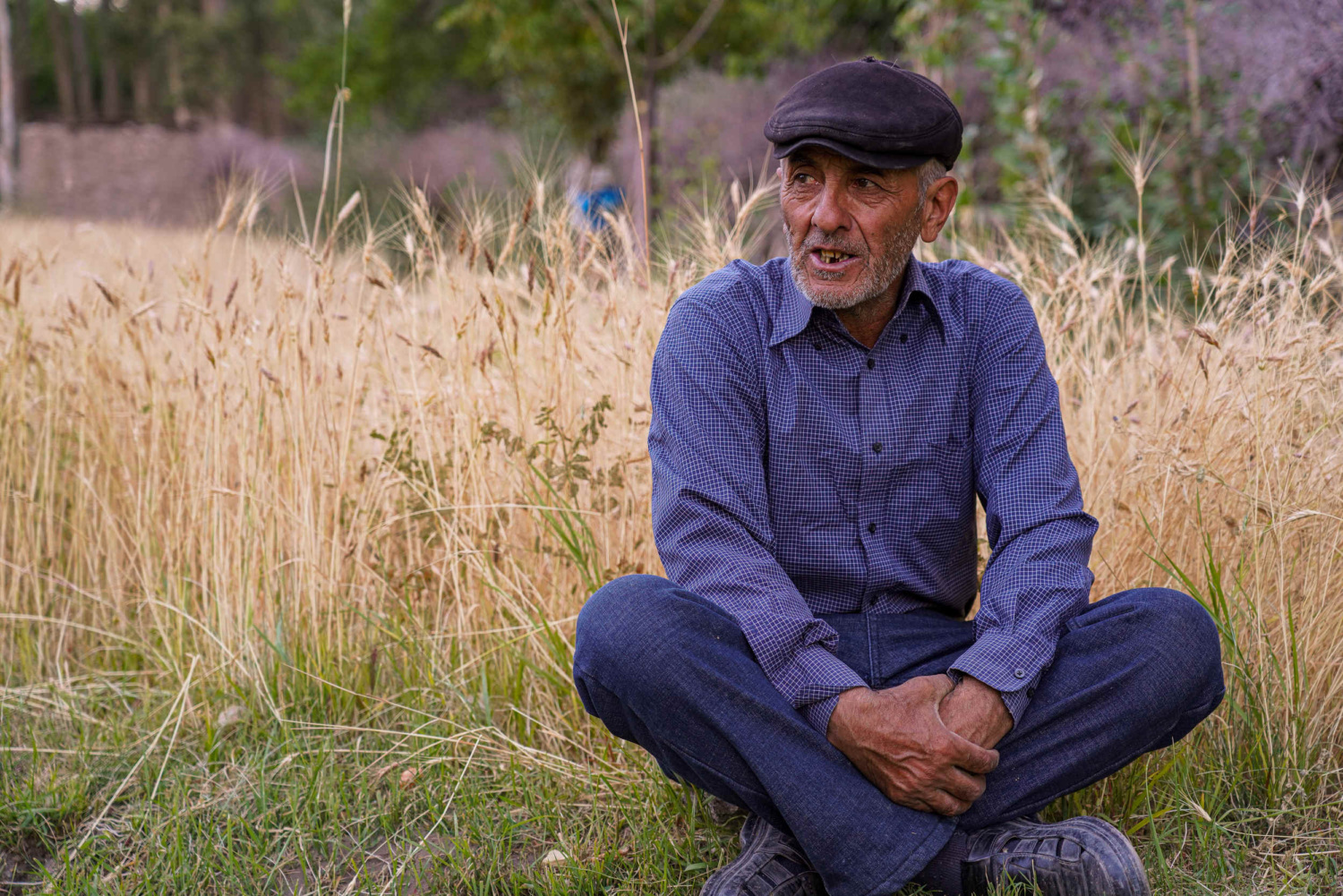
When we met Gulmirzoev Qodirshoh—a farmer and elder in the community—he introduced himself simply, with the calm confidence of someone who has spent a lifetime working with land that demands respect. He spoke about decades of experience, learned first by watching and helping, then through years of trial, error, and hard-earned knowledge. In his words, farming is not something you can do “once in a while. If you leave the land and return only when you want harvest, the land won’t reward you. You must stay close to it, understand it, and work with it.”
When the old calendar starts to shift
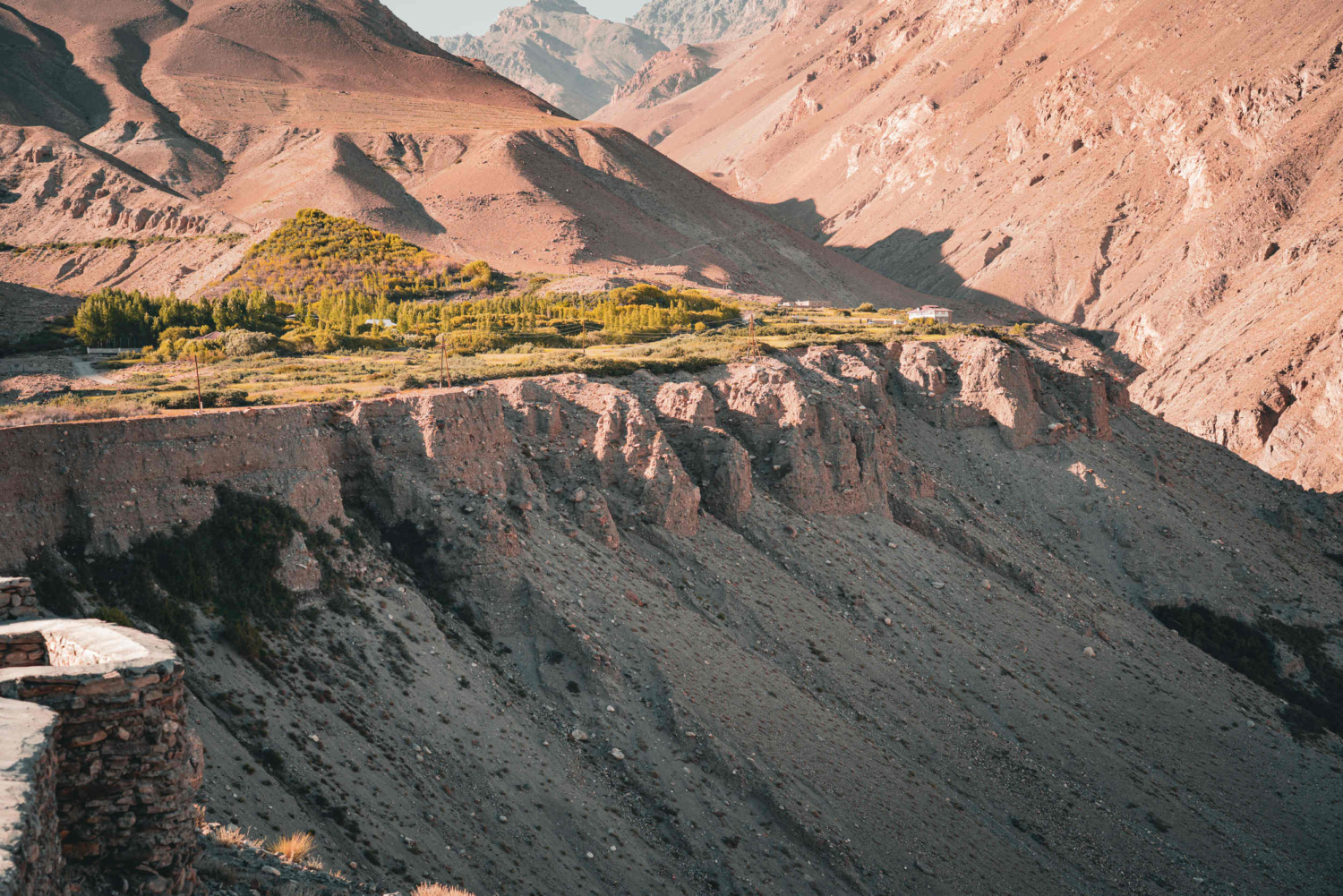
In the Pamirs, the margin for error is thin. Farmers here plan their seasons carefully—counting days, tracking sun and warmth, planting within a narrow window. Gulmirzoev Qodirshoh described how planting even a little late can shrink the harvest. The rhythm used to be dependable: the right work at the right time. But now, that rhythm is changing.
He spoke about climate change not as an abstract global idea, but as a lived reality: seasons behaving differently, yields becoming less predictable, and farmers needing to adapt quickly to protect their food supply and livelihoods. This is exactly why community-led solutions matter—because local people notice change first, and they are already testing ways to respond.
Home Planet Fund exists to support this kind of leadership: communities already doing vital nature-based work and needing flexible backing to strengthen and scale what they know works.
“Seeds are life”—and they can’t be allowed to disappear
As Gulmirzoev Qodirshoh talked, one message returned again and again: seeds must be protected.
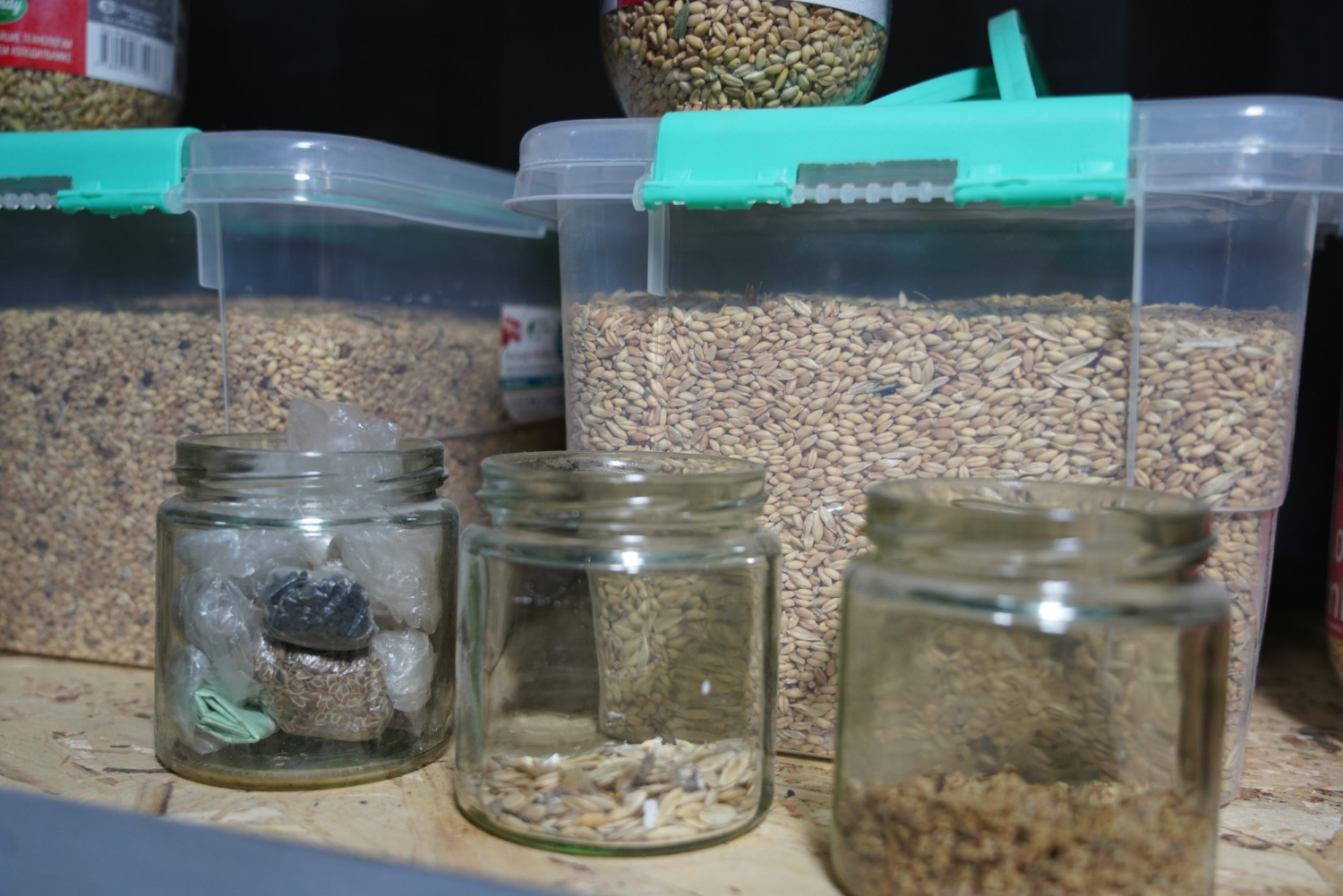
Not just any seeds—local seeds, the varieties that have adapted over generations to altitude, cold, wind, and short growing seasons. He listed what people in the village grow and safeguard: barley, broad beans, multiple kinds of wheat (including red and white varieties), and millet/sorghum-type grains—each with its own story and purpose. These seeds are part of culture as much as agriculture. Losing them isn’t only losing food. It’s losing resilience, identity, and options for the future.
And in places like the Pamirs—where roads can be difficult, winters long, and outside supplies uncertain—seed security is food security.
That’s where the idea of a community seed bank becomes powerful.
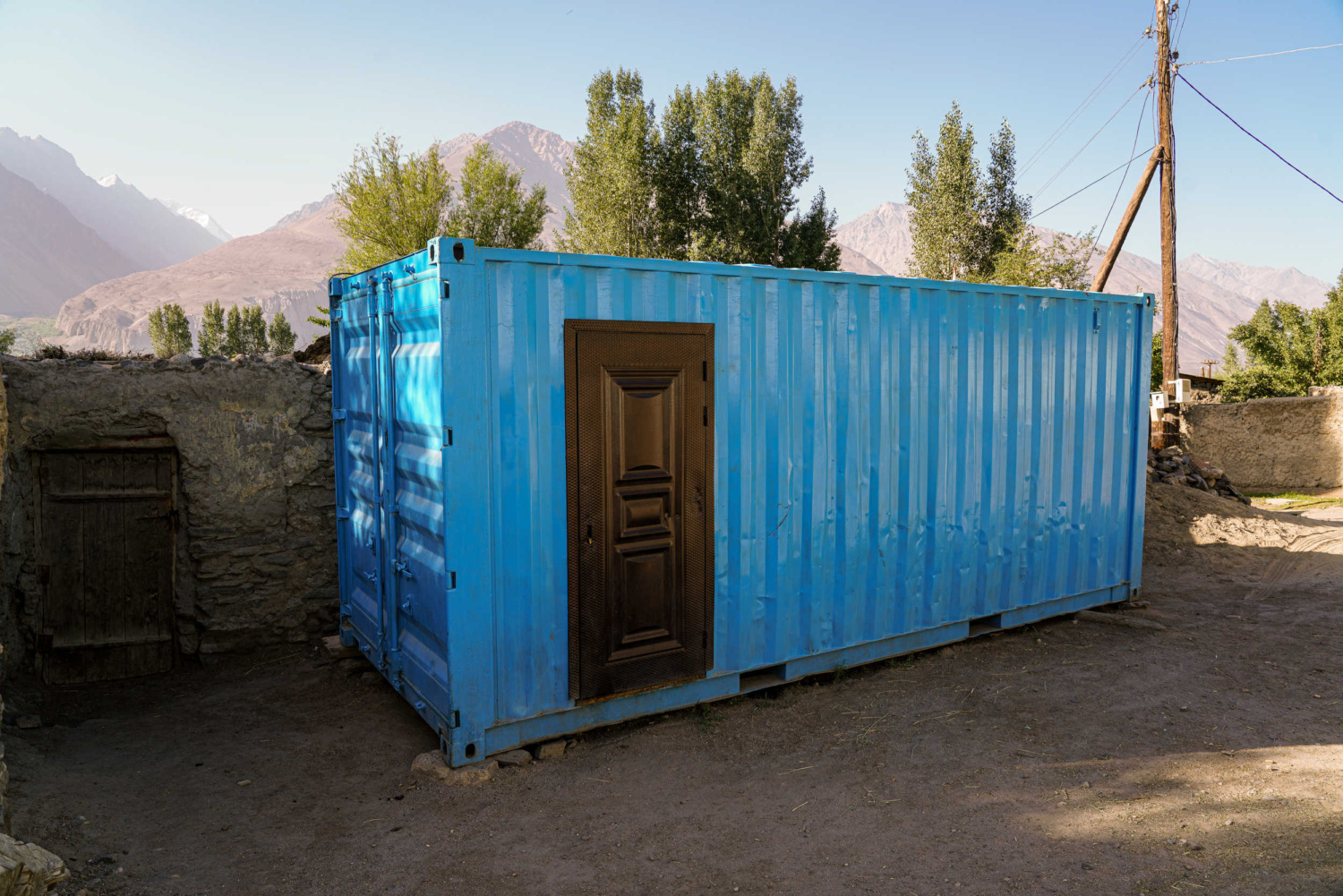
A container arrives—and becomes a “bank” for the village
In Tughgoz, the seed bank took a practical form: a metal container brought to the community and adapted so farmers can store and manage seeds safely. Gulmirzoev Qodirshoh described how meaningful this felt—because it wasn’t just infrastructure; it was protection for something priceless.
The system is simple in concept, but strong in impact:
- Seeds are stored in portions (he mentioned small measured amounts, like a few hundred grams at a time).
- Varieties are labeled so the community knows what seed is stored, where it came from, and which village or household contributed it.
- The container improves storage conditions and reduces common risks like pests, spoilage, and loss over time.
- The seed bank creates a shared community “insurance policy,” so families aren’t alone if a harvest fails.
Home Planet Fund has supported the growth of community seed banks in Tajikistan’s high mountain regions as a locally led way to strengthen food security and protect agrobiodiversity under increasingly unpredictable conditions.
And importantly, these seed banks are not top-down projects. They are community-run—designed to fit local reality, local governance, and local knowledge. That philosophy is core to Home Planet Fund’s model: identifying and supporting communities already doing crucial work, rather than asking them to reshape themselves to fit a funder’s system.
The most valuable inheritance
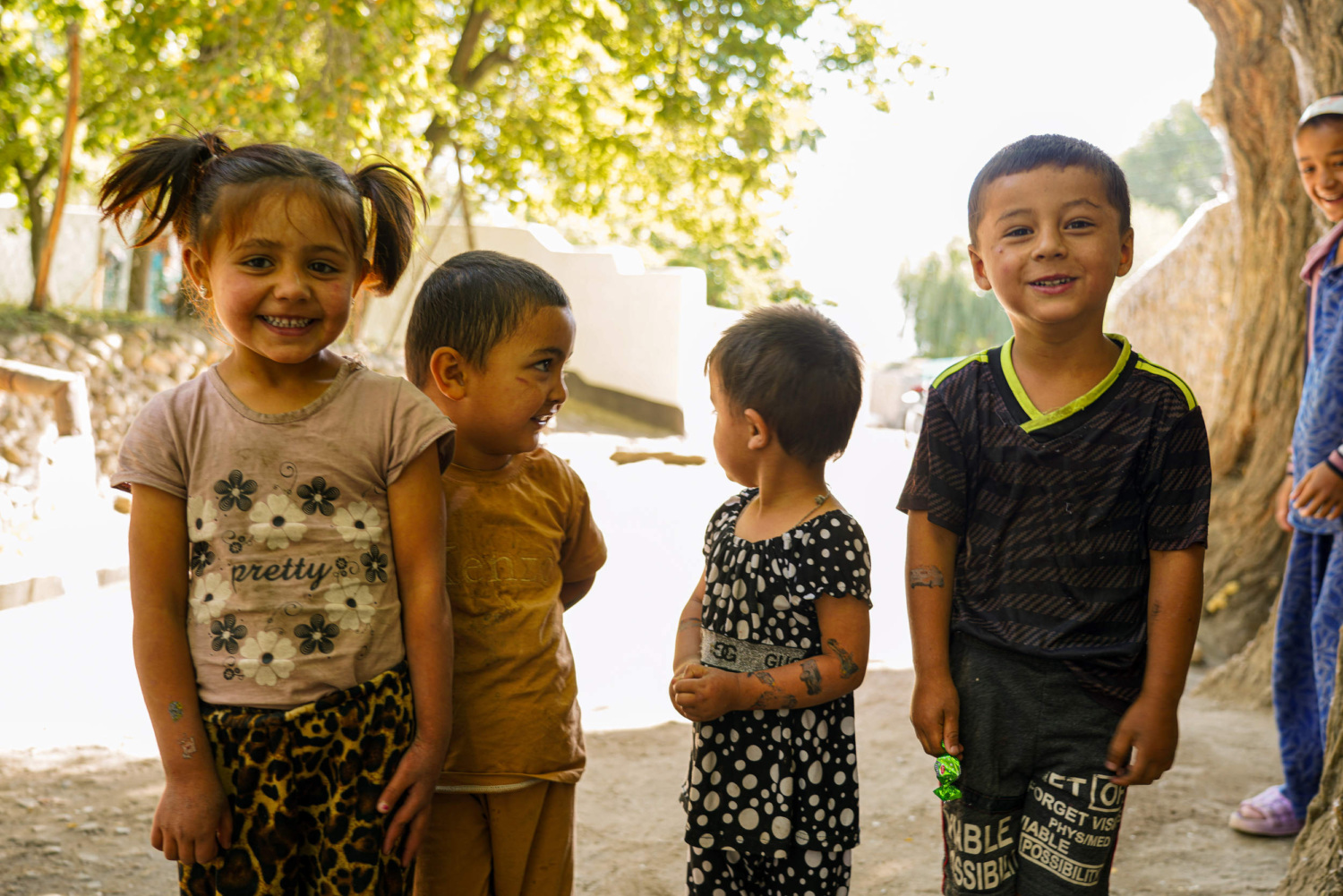
Qodirshoh’s most emotional moments came when he spoke about children.
He worries that young people might drift away from farming—not because they don’t care, but because life is getting harder and the future feels uncertain. Yet he also believes farming must continue, because without land and food, nothing else can stand.
He urged the next generation to learn the work, build experience, and respect the “fine” nature of the land—because farming is not guesswork. It’s knowledge, and knowledge takes years.
In that sense, the seed bank isn’t only about storing grain. It’s about storing continuity.
A seed bank preserves biodiversity, but it also preserves the idea that community can prepare for the future together—and that young people can inherit something more valuable than money: a living system that feeds them, year after year.
Why this matters to Home Planet Fund
Home Planet Fund was launched as an independent nonprofit to support local and Indigenous communities working with nature to confront climate breakdown. In the Pamirs, that support becomes real through practical tools—like community seed banks—that protect food systems, culture, and resilience where environmental change hits hardest.
In the high mountains, adaptation is not optional. It is daily life.
And in Tughgoz, adaptation now has a home: a seed bank that belongs to the community, filled with local varieties, guarded by shared responsibility, and shaped by the wisdom of farmers like Gul Mirzo—who measure the years not by calendars, but by what the land teaches.