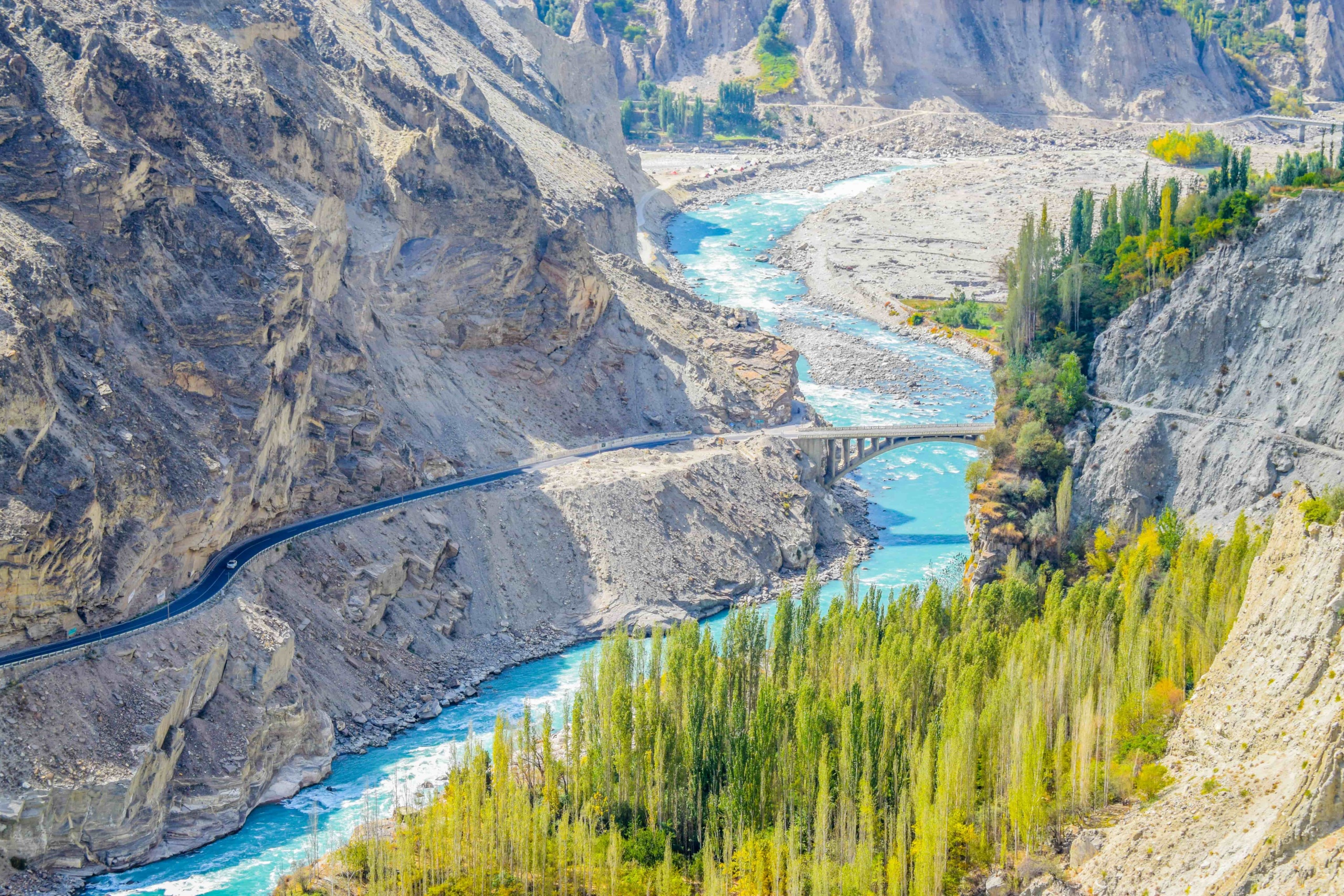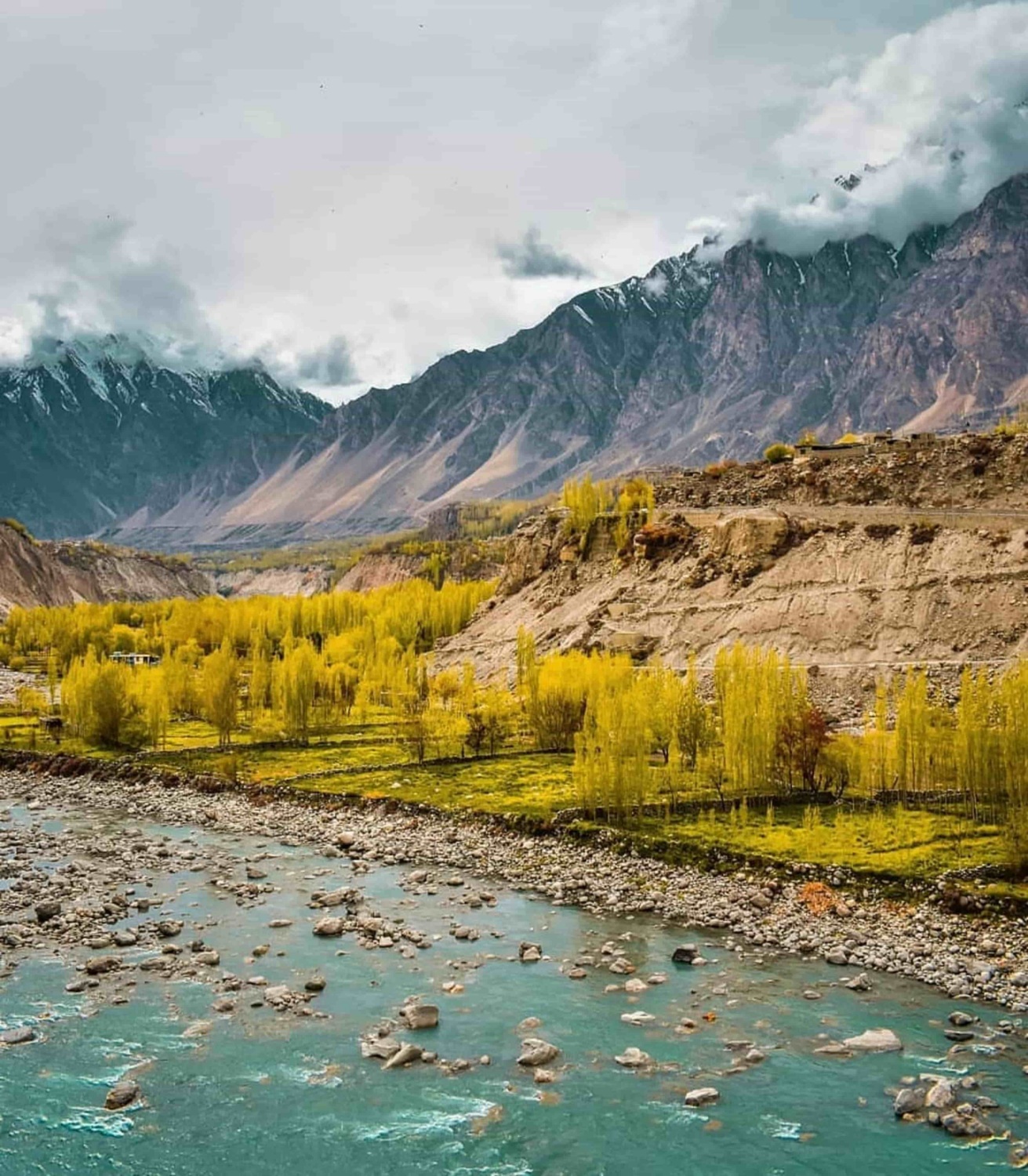
The village of Diramishal sits at 2,500 meters above sea level, in Central Hunza, near Karimabad. This is the ancestral home of the Burusho people, who speak Burushaski, a language unrelated to any other language on Earth. Families here have farmed the same terraces for centuries. They have read the same mountains, watched the same snow, and had their lives governed by the melt.
That timing is now breaking down.
The seasonal channels that once fed crops and orchards reliably now flood in the summer. The same channels run dry at the moments when the crops need water most. Ancient apricot orchards that have sustained families for generations are struggling under shifting snowfall, sudden heat, and soil that is now thinning dramatically. Above the village, the Khanda Duss slope rises bare and boulder-strewn across roughly 500 kanals (about 60 acres). Nothing holds the soil there. Nothing slows the water. When the mountain moves now, there is nothing between it and the homes below.
The people of Diramishal know all of this from direct experience, not from reports. They have watched it happen, and they are living it now.
This is the Third Pole, and it is one mountain system.
More than two billion people rely on the water that comes off this ice for drinking, for agriculture, and for their economies.
Home Planet Fund already partners with communities in Afghanistan’s Badakhshan and across the Pamirs of Tajikistan. Both sit inside this same mountain system. With our partners in Hunza, the picture is now whole.
Look closely and something remarkable emerges. In Badakhshan, our partners plant willow on degraded mountain land. In the Pamirs, our partners work the same thin, rocky soil to bring back what grows there. Above Karimabad, our partners are planting willow on a bare Karakoram slope.
Three countries, one body of ice, the same tree. The same instinct: that the way to hold a mountain together is to grow something on it.
The communities in each of these countries are applying the same resilience building techniques to mitigate the impacts from the dramatic planetary changes we face.
Home Planet Fund recognizes the critical importance of doing everything possible to slow the melting of the glaciers and ice fields within the Third Pole. Our partners in Hunza are doing that from the ground up, one terrace at a time, on a slope that everyone else had written off.
The community did not wait.
Before any grant was sought, before any institutional partner was involved, the people of Diramishal organized themselves and went up the slope.
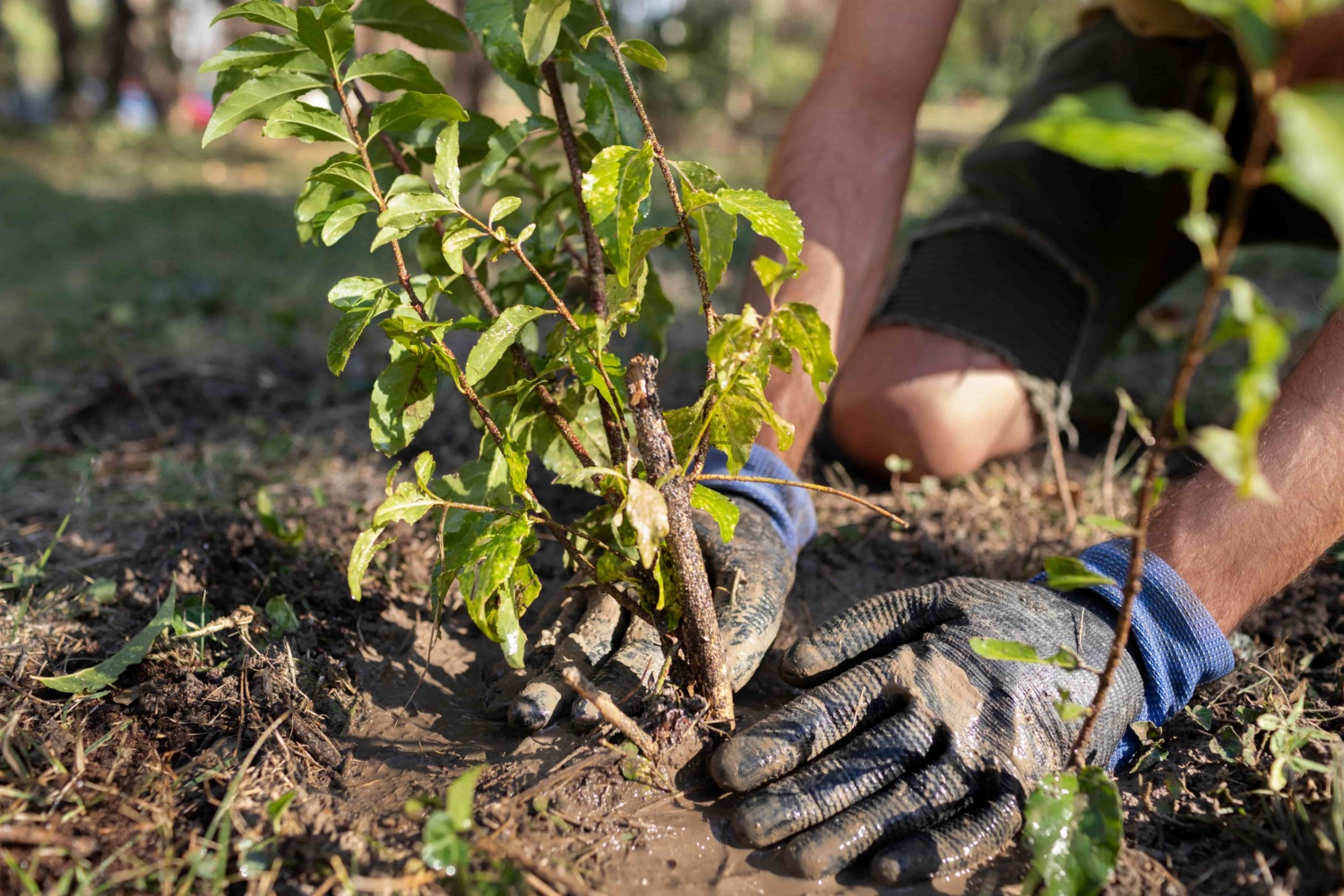
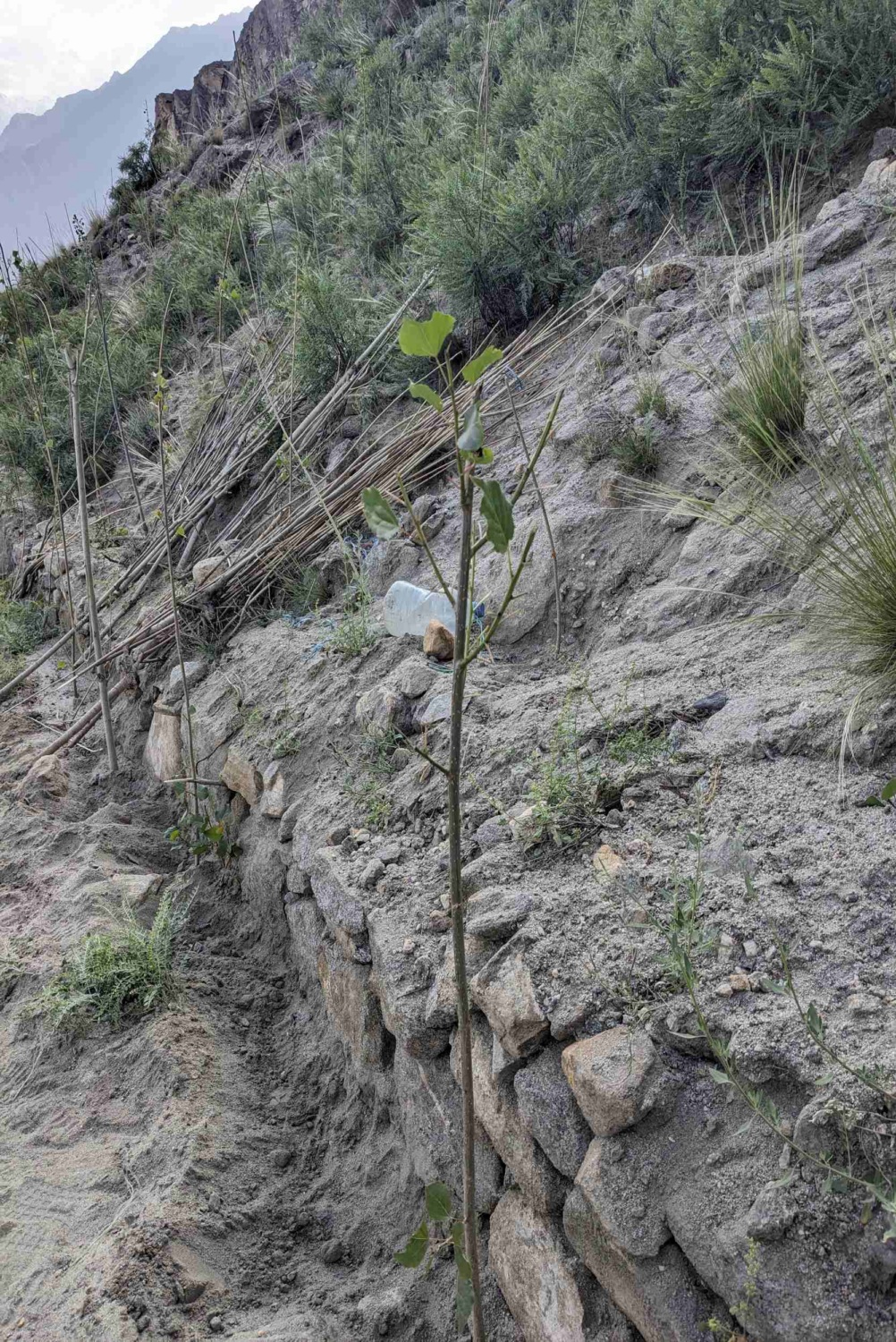
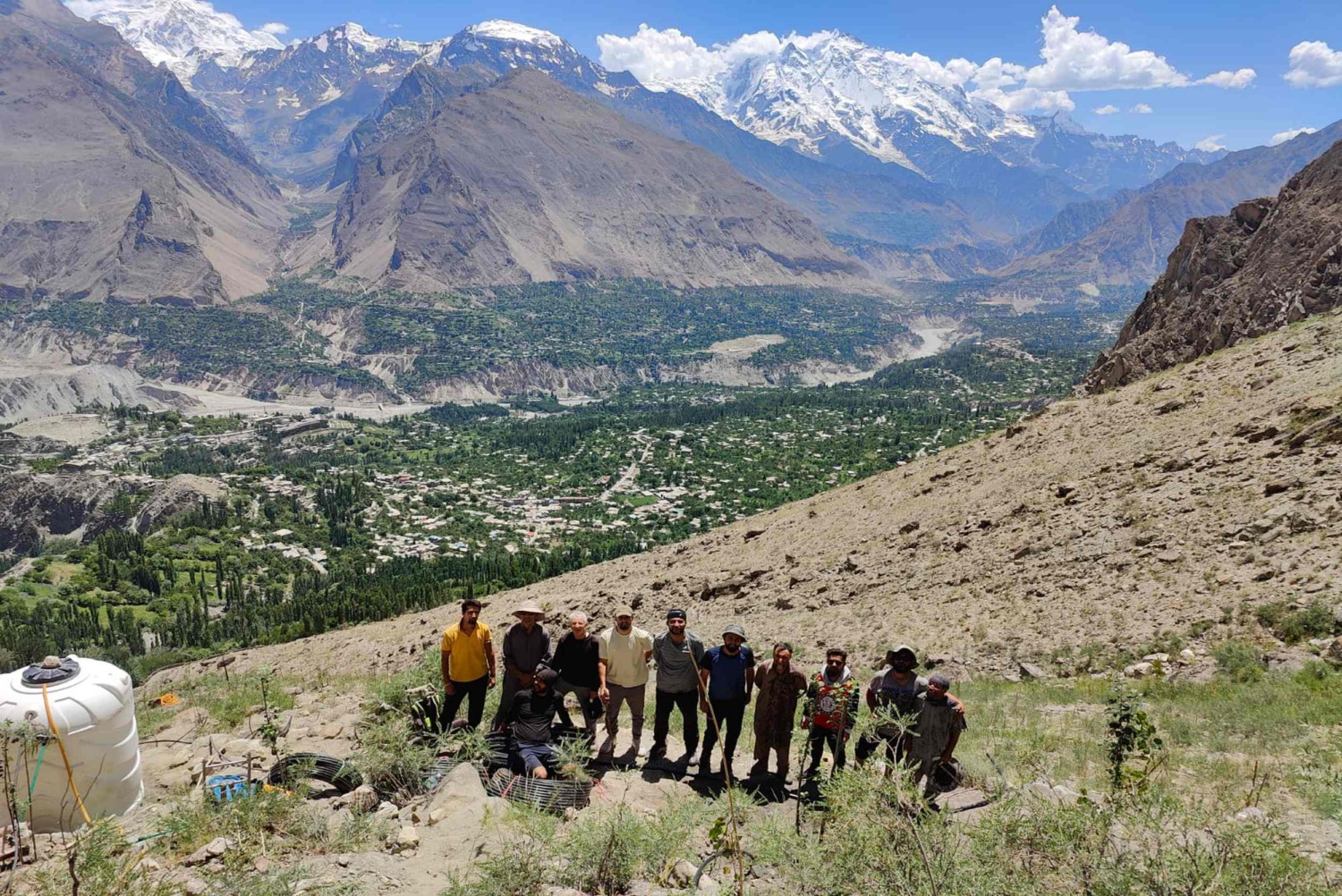
They leveled the ground by hand. They built terraces. They put up fencing. They laid a basic irrigation system to carry water to the young trees. They gathered saplings that were provided by local philanthropists and through the Hunza diaspora, people who had left the valley for work but never stopped belonging to it. And on that barren, boulder-covered mountainside, they established roughly 39 kanals (about five acres) of living plantation.
They did this with no external institutional funding at all.
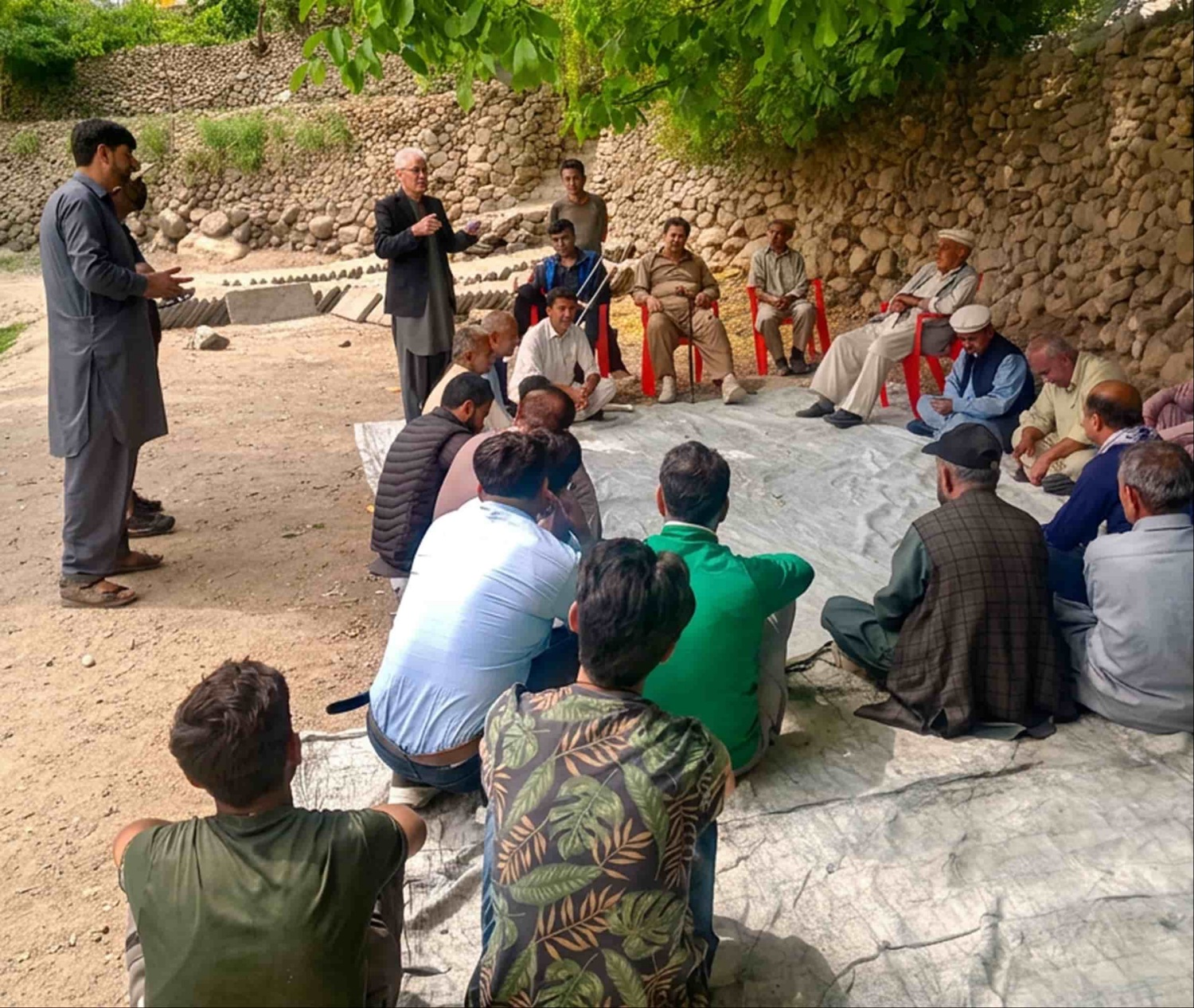
The Diramiting Development Organization (DDO) was registered in 2023 by the residents of this village. Its members are local volunteers, farmers, youth, and women who are living inside the changes they are working to slow. It is not an outside organization working in a community. It is the community, having chosen to organize itself, then to act.
That distinction is everything. And it is the reason why Home Planet Fund is here.
The plantation on the Khanda Duss slope was built through collective will alone. Our partners are not asking anyone to create something for them. They are asking for what they need to protect what they have already built, and to carry it further up the mountain, and are hoping to expand it elsewhere.
What our partners are doing.
The first task is finding water, because water is what the young trees will live or die by.
The channel that feeds the plantation draws from snowmelt and glacial runoff. It is reliable in spring and early summer, but it is also dangerous when a glacial lake gives way upstream. A single flood could take out the intake and kill trees the community has spent years raising. So our partners are reinforcing the intake structures and the channel walls. They are building a reservoir that can hold water through the unpredictable weeks. Drip irrigation will carry that water across the whole plantation, so every tree is reached and no water is wasted on a slope where none can be spared.
They are also training their own people to maintain the system, so the knowledge stays in the village.
Alongside the water, the forest grows outward. Our partners are preparing new ground across the barren zones of Khanda Duss, terracing and stabilizing soil that has held nothing for a very long time. Planting happens in the spring window, in April and May, which is when a sapling at this altitude has its best chance. These are community events, and volunteers, youth, and women plant together.
Hoor Shah, the Vice President of DDO, now 80 years old, recalls how things used to be.
“Karimabad was once distinguished by lush greenery and carefully maintained terraced fields, where our ancestors lived in harmony with nature.”
He is acutely aware of the consistent shocks to the once pristine natural environment of his homeland.
“Today tourism and external investment have accelerated construction, replacing green spaces with concrete. Earth’s climatic changes are adding other additional stresses. We stand at a crossroads: development and tourism are essential to Hunza’s future, but progress should not come at the cost of eliminating the trees, terraces, and natural landscapes that have been preserved for generations. We refuse to wait until our natural heritage is irreversibly lost.”
The trees that he and his organization have chosen are poplar, willow, Russian olive, mulberry, and cherry: each one of them is chosen because it belongs here. This is because it was Hunza farmers, who carry generations of knowledge about which trees survive at this exact altitude, on this exact aspect, in this specific soil, who made this decision.
Four caretakers from the village tend the plantation day to day. They manage the irrigation, check the health of the trees zone by zone, and watch over the young growth. These are green jobs rooted in the place they serve, and they are designed to outlast the project. Fencing keeps livestock out of the priority areas while the trees are still vulnerable.
Every two weeks, between 50 and 70 people gather to look at what is happening on the slope and decide together what to do next. Those meetings are not a reporting exercise. They are how this community makes decisions, and the meetings were happening long before we arrived.
If a flood damages the intake, or a planting zone struggles, the people who noticed it first are the people who decide what to do about it.
More than 350 people here are learning water management, land care, and how to read a climate that no longer behaves the way their grandparents’ climate did.
Mr. Shah’s vision for DDO on these lands is clear:
“Our vision is that one day, when people look upon Karimabad from the surrounding mountains, they will not see only concrete structures. Instead, they will once again witness green terraces, flourishing trees, birds, walking trails, and a living landscape. Let us act today so that future generations may say that our ancestors did not merely inherit this beautiful land – they protected it, restored it, and passed it on to us with greater care.”
What will still be here.
The most durable thing this work leaves behind is the forest itself.
Once the trees take root and reach height, they largely look after themselves. They will stabilize the soil on a slope that has been shedding it for decades. They will slow the water. They will hold carbon. They will shelter life. They will do all of that for generations, long after any grant period has ended and long after any of us have stopped talking about it.
The reservoir and the reinforced channels will serve the plantation and the farmland below it for many years, needing only the community maintenance that Rajaki has always provided.
The knowledge stays. More than 350 people who understand how to manage water, care for land, and respond when the mountain does something new. That knowledge does not expire, and it does not leave when a project closes.
The caretaker roles are designed to become permanent. As the trees mature and need less tending, the community intends to carry those roles forward through its own collections. What starts as work funded from outside becomes a stewardship system the village owns.
And Rajaki, a tradition under pressure from a changing world, gets a new reason to gather.
The year is still marked by music.
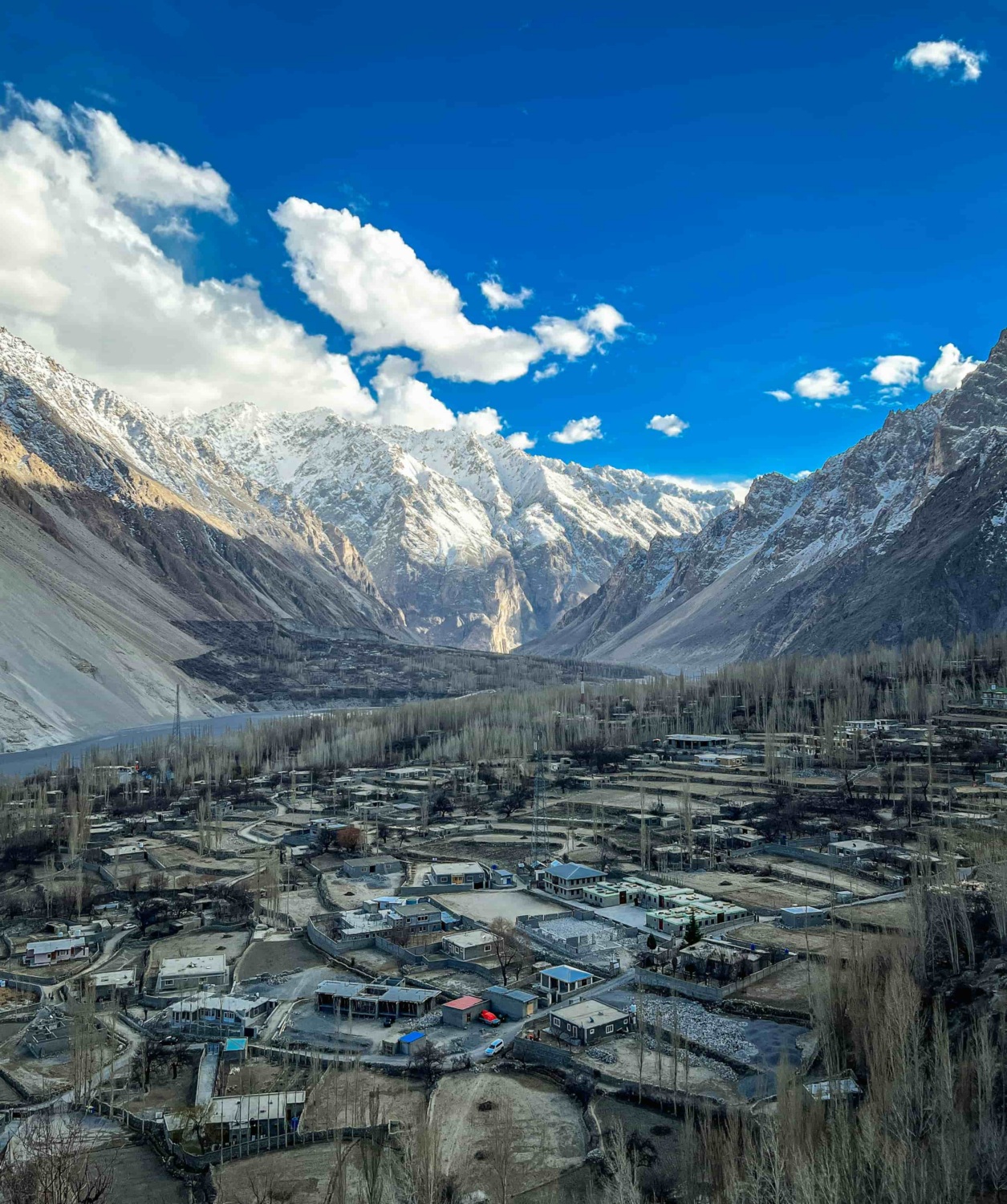
Hunza’s agricultural calendar is anchored by seasonal festivals, known here as ta-masha. Local musicians play traditional Burushaski tunes that have accompanied these gatherings for centuries.
Bo Fao arrives in March, at the spring planting window, when the valley wakes up and the work begins. Ginani comes in July, at peak growing season, when everything that was planted is visibly alive and the slope looks least like the bare rock it used to be.
These festivals do not belong to any project. They belong to the community, and they have outlasted every institution that has ever come through this valley. Our partners are simply using them as they have always been used. They are moments when households, generations, and genders come together at exactly the time of year when collective work matters most.
Within those gatherings, people are now talking about what they are watching. The receding glaciers, snow arriving at the wrong time, or not at all, seasons that no longer give the signals they used to give. Elders, youth, and women sharing what they have seen with their own eyes, and finding that everyone else has seen the same things.
Yet these gatherings remain joyous occasions, and this is of critical importance.
This is not a community enduring the climate crisis in silence. It is a community that still plays music in the spring, and has decided that the newly planted forest on the mountain is worth celebrating.
Why we are here.
Home Planet Fund supports communities who are already living the solutions.
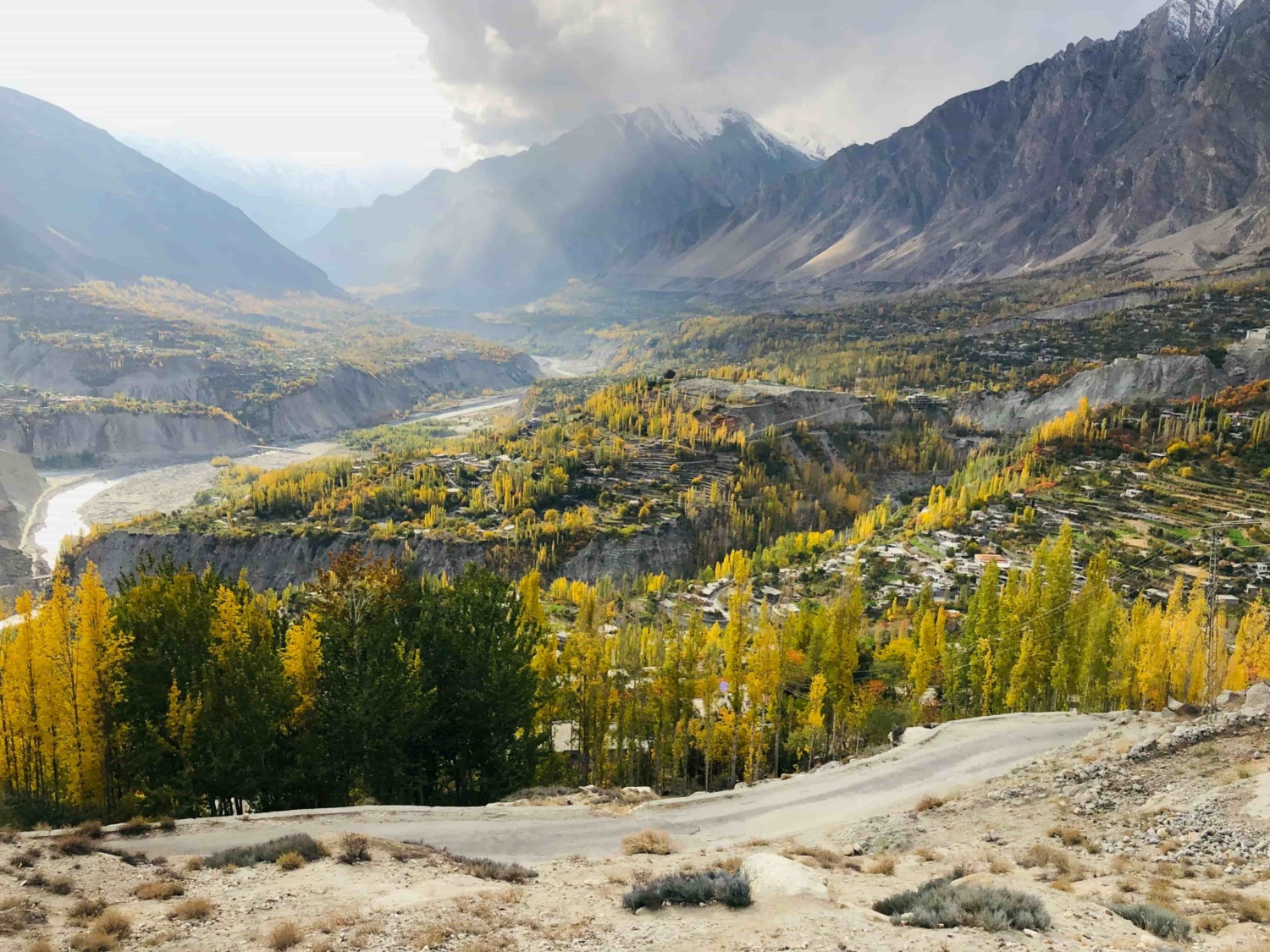
The people of Diramishal did not begin with a grant. They began with responsibility. They looked at a degraded slope above their village and chose to act. They brought labor, knowledge, relationships, and care. They began planting trees long before anyone asked them to prove what was possible.
Samsamullah Baig, DDO’s President, is clear about what needs to be done, and holds the long-term vision of what is necessary to sustain the work.
“We face unprecedented climate challenges that threaten our fragile ecosystem, yet our resilience remains unshaken. Just as our majestic ancestors risked their lives to guard this region and build a legendary homeland, we pledge to pool our efforts and harness untapped resources to ensure our dreamland remains evergreen. Through collective wisdom and inclusivity, we will continue to make a lasting difference.”
Home Planet Fund did not bring them a solution. They had it all along. What they needed was for the water to hold and the trees to survive long enough to become a forest.
Our role now is to make sure they can keep going.
This is also a beginning for us. It opens our first relationship in Pakistan, and our first in the Karakoram. It gives us the chance to learn from a place where people are living on the front lines of climate change and water uncertainty, while carrying deep traditions of cooperation and care for the common good, and for the good of the Earth.
More support means their work continues into the future.
Since 100 percent of all donations to Home Planet Fund go directly to our partners, your support ensures the future of this project for the people of Diramishal, who are doing this work for the Earth.
We are all in for the Earth.
Join us in supporting them.
Home Planet Fund is proud to be partnering with the Diramiting Development Organization on this work.