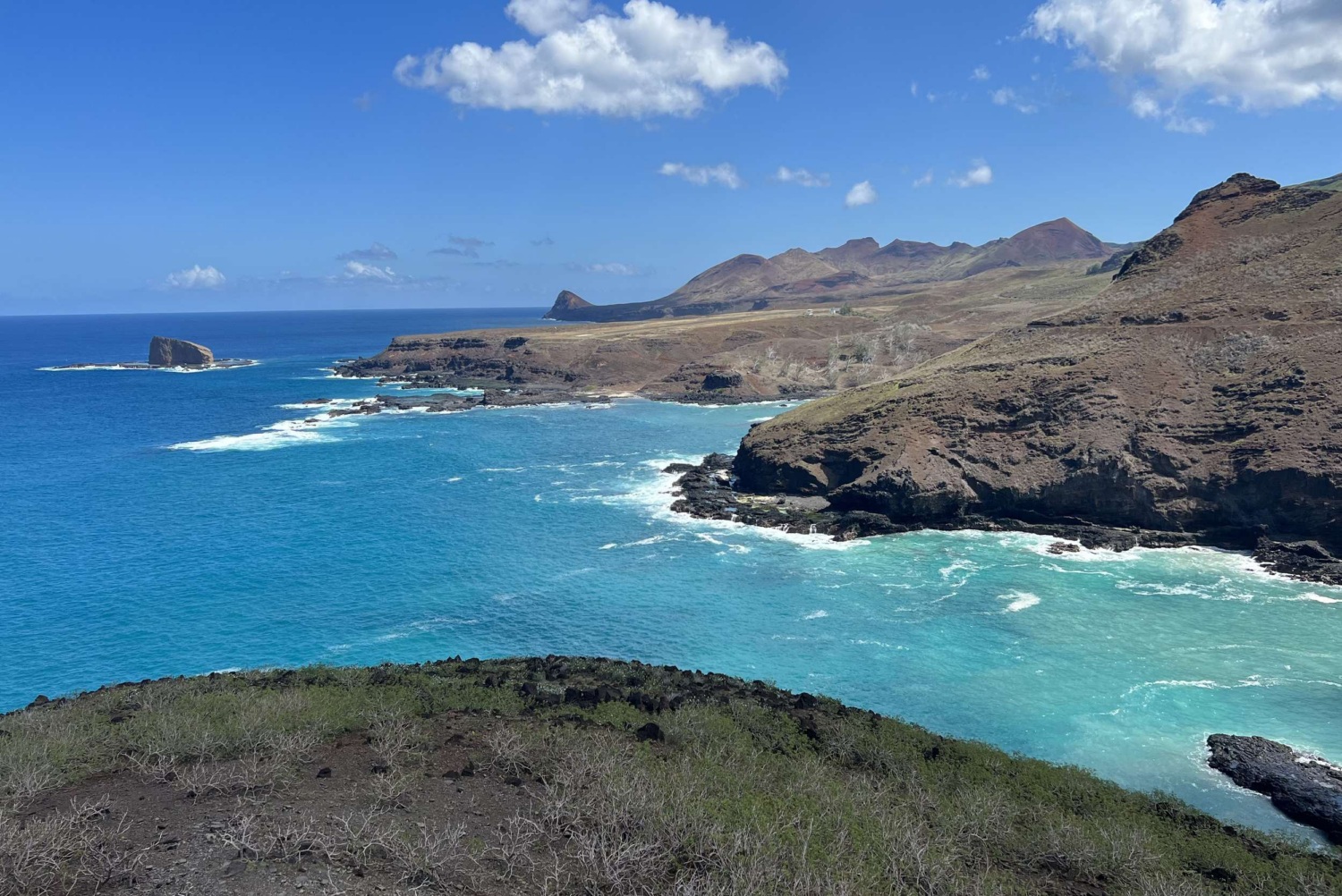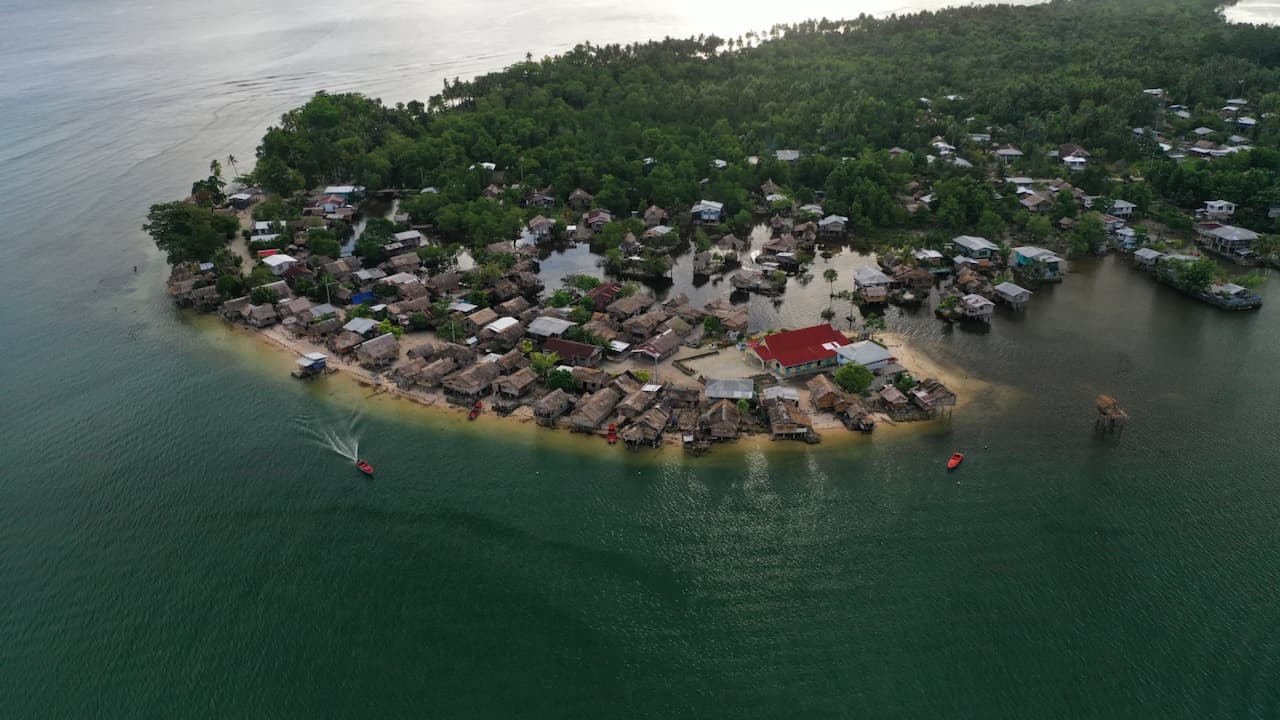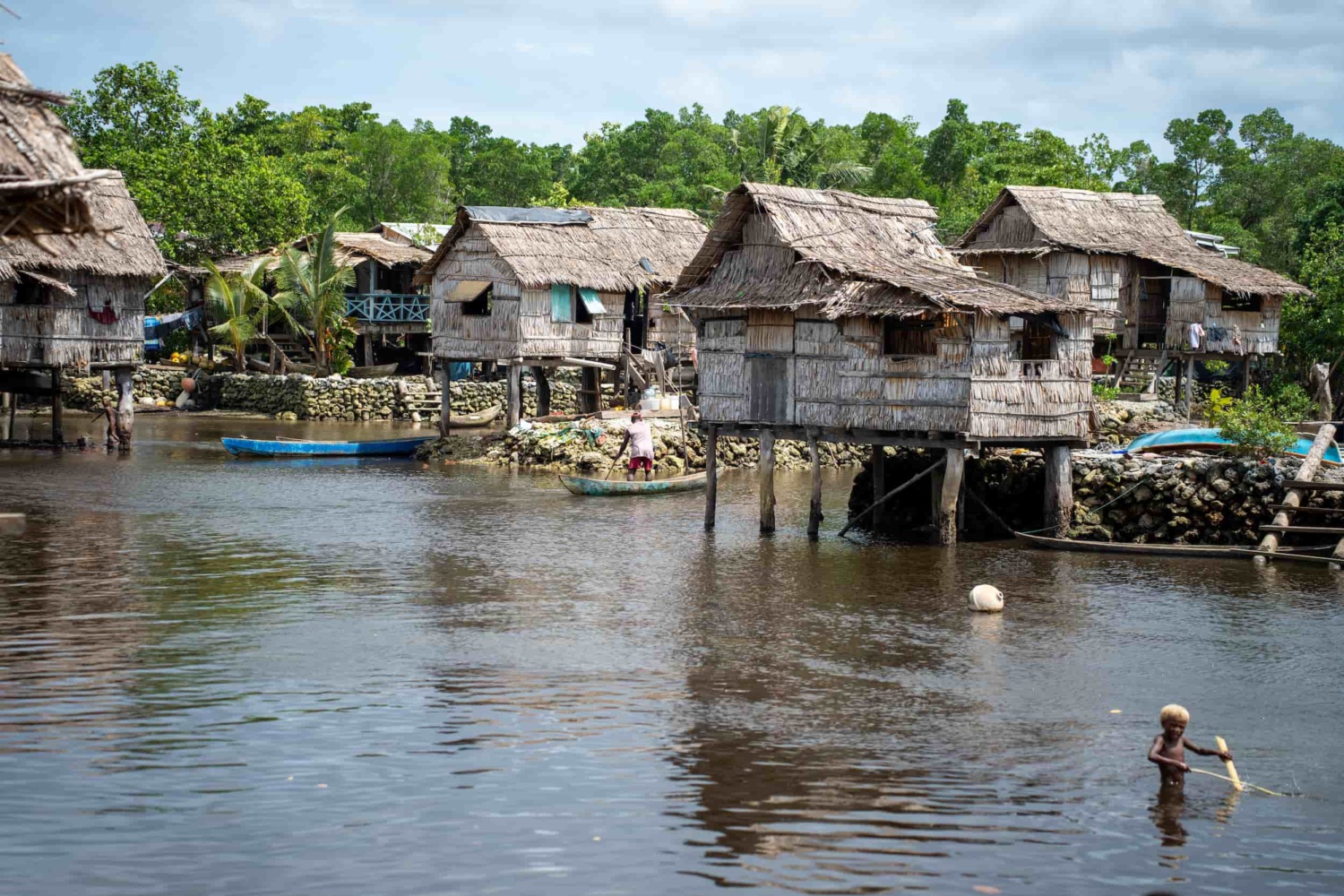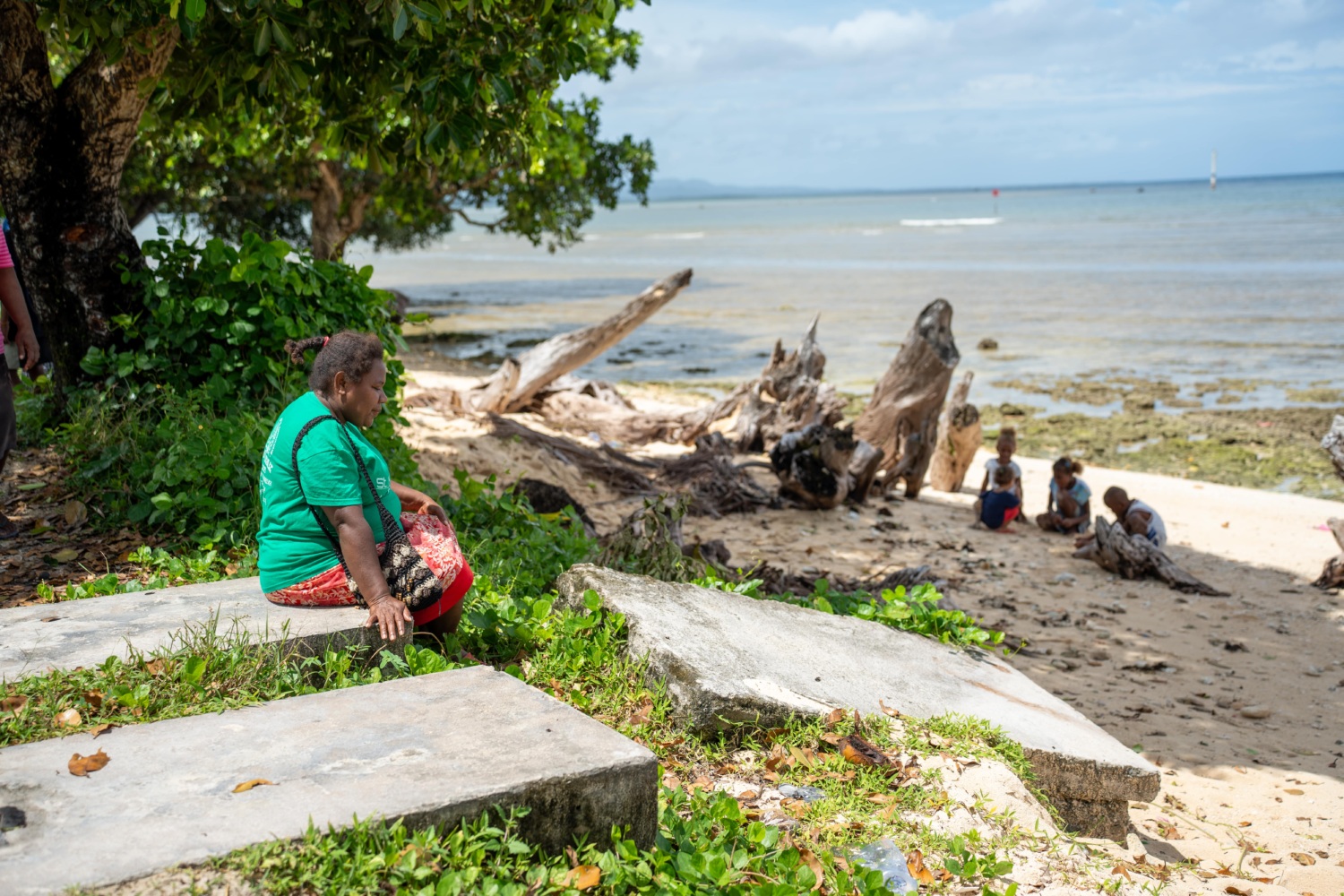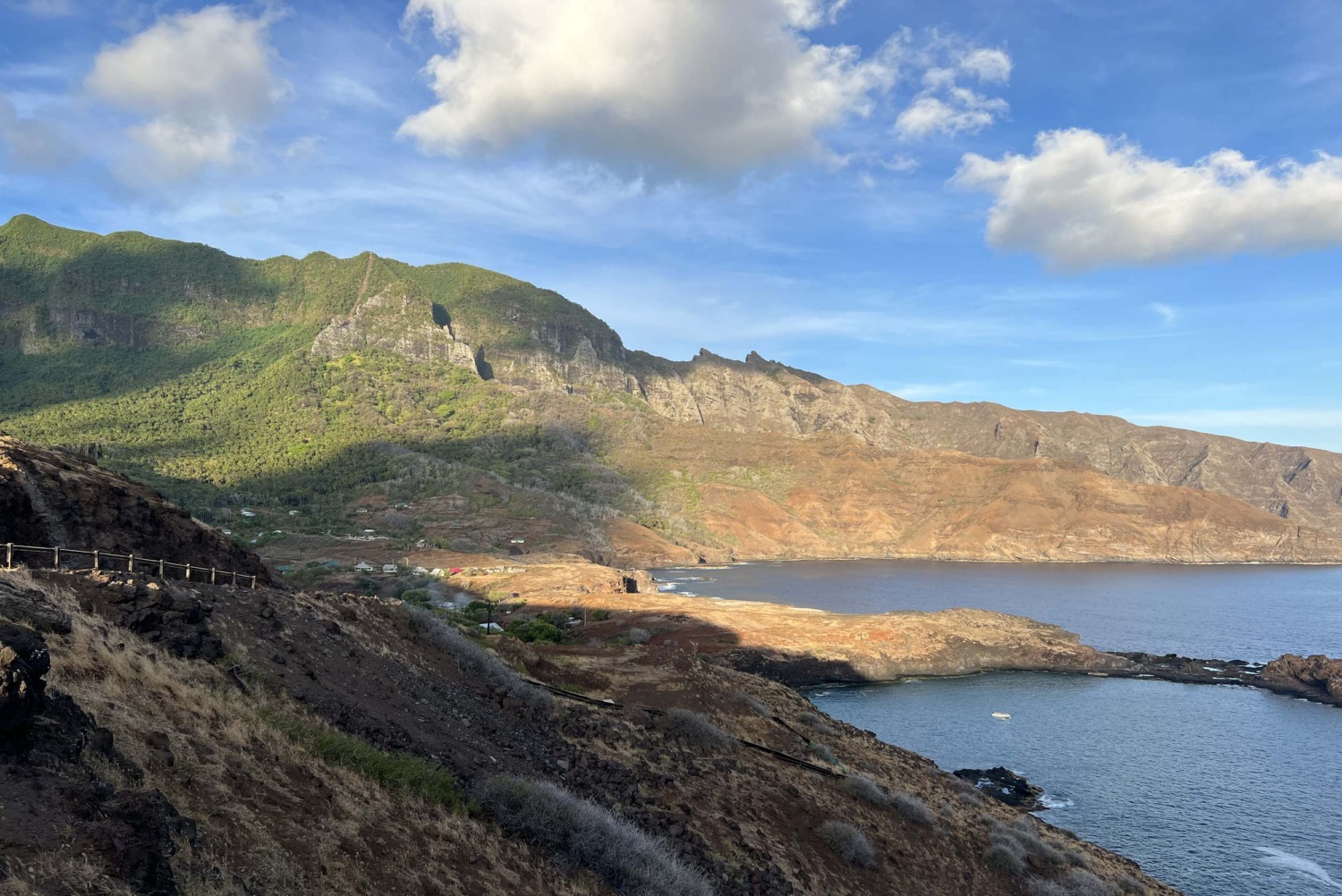
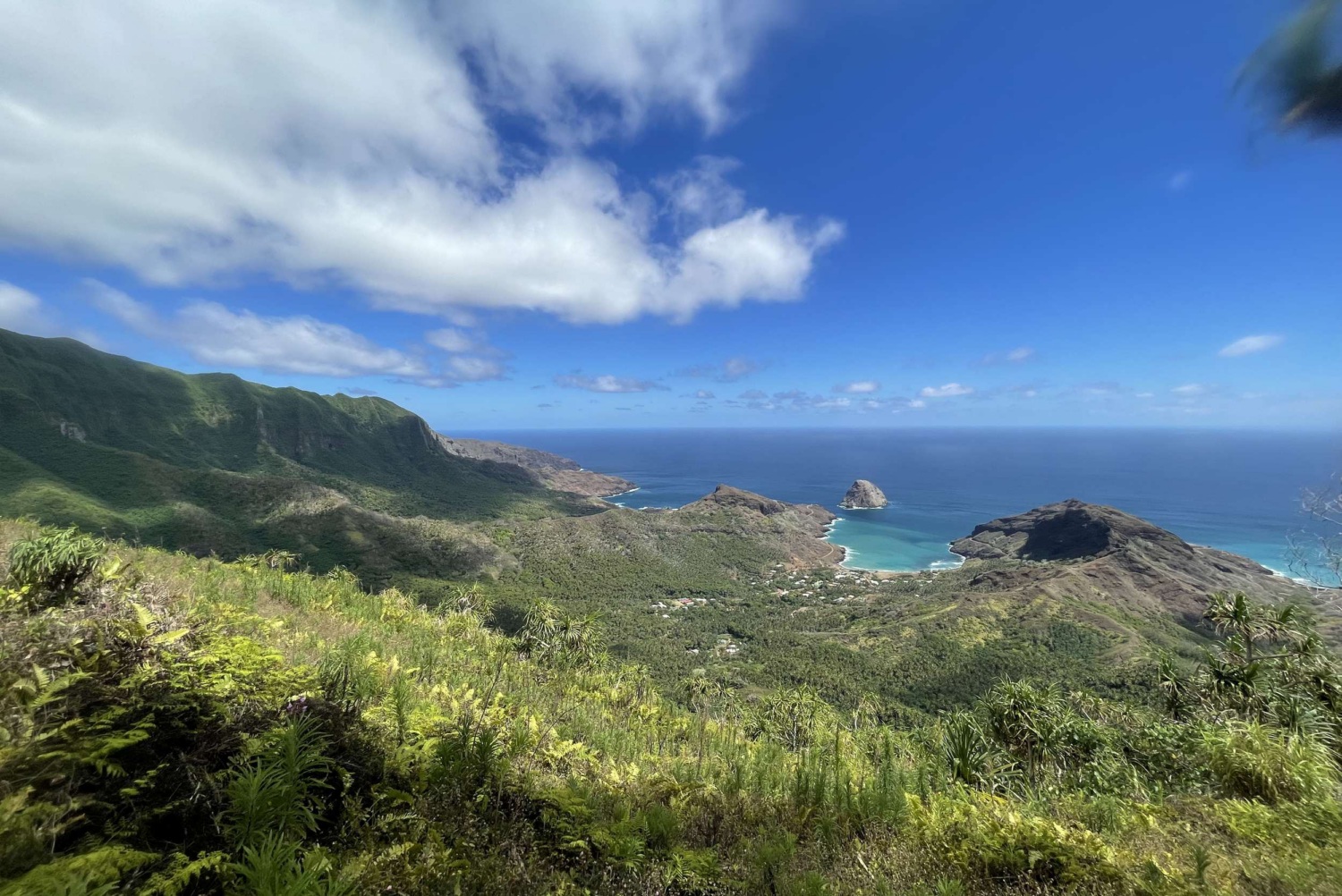
Vaiku’a: Two Birds, One Island, No Second Chance Conservation does not have to begin after something has been lost. On the remote island of Ua Huka, it begins with the local community protecting what remains.
The Pihiti and the Pāti’oti’o
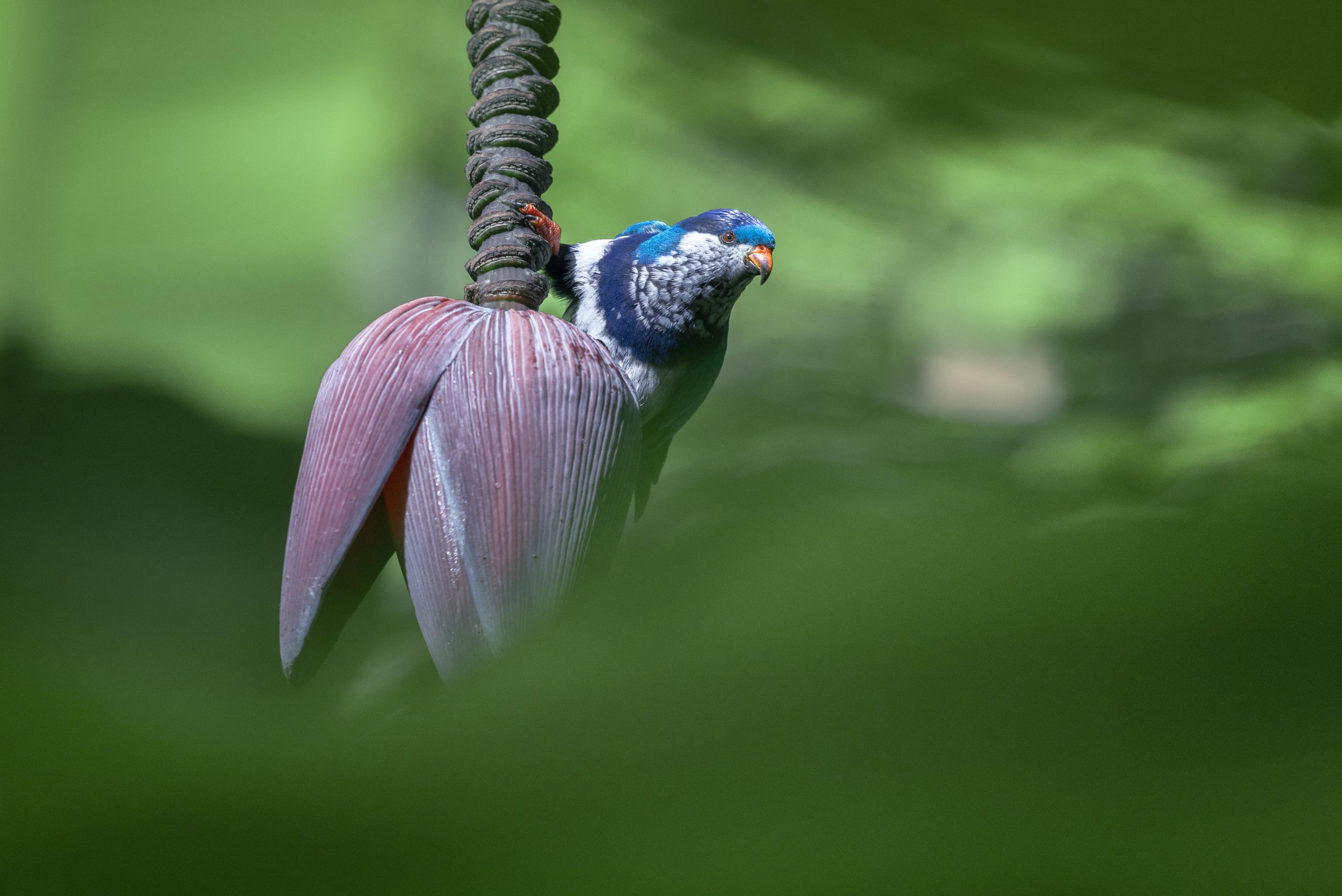
The Pihiti, a small blue parrot, is known in English as the Ultramarine Lorikeet and in science as Vini ultramarina. The second bird, the Pāti’oti’o, the Iphis Monarch, Pomarea iphis, is a flycatcher. Both are listed as Critically Endangered on the IUCN Red List. Both live on Ua Huka. Neither exist anywhere else on Earth.
They are not only biological assets. Both appear in the haka manu, the bird dance: one of the ways Marquesan people have long described who they are and where they come from. To lose the birds is to lose a critical part of the vocabulary of a culture. To lose the birds is to lose part of the very identity of the people who have always lived there.
The ecological role of the birds is no less important. They disperse seeds, they pollinate, and they regulate insect populations in the forest. The forests they help maintain hold water in the soil, catch rainfall, and keep the Ua Huka’s ridges from eroding into the sea. These same forests support beekeeping, orchards, wood carving, and the coconut groves. The birds are not just a beautiful decoration on top of a working system – they are part of its critical machinery.
Why the rat matters so much
The black rat, Rattus rattus, is one of the hundred worst invasive species on Earth. Once it becomes established on an island it is nearly unstoppable. It climbs, it eats eggs, and it finds nests that evolved without any need for defences.
What would happen on Ua Huka is not just a matter of speculation. The Ultramarine Lorikeet once lived on Tahuata, on Nuku Hiva, on Ua Pou, and on Fatu Iva. On every one of those islands, the rat arrived and the lorikeet disappeared. On Fatu Iva, thirty lorikeets were reintroduced. Within a few years of confirmed rat presence, all thirty were gone.
The Iphis Monarch does not adapt well to captivity, and relocation is not considered a viable strategy. There is no ark. There is no second site. Protecting Ua Huka is the only option left.
The stakes are also economic, and the evidence is again next door. Many families on Ua Huka depend partly or fully on copra, the dried coconut kernel that is the island’s main export. Rats damage coconuts directly. It is estimated that an introduction of rats to the island could cut copra production by one-half to up to two thirds.
In 2010, rat-free Ua Huka exported 204 tons of copra. Fatu Iva, an island of almost exactly the same size but that has rats, exported only 98 tons.
Rats are not the only threat. Little fire ants, red-vented bulbuls, common mynas, Miconia calvescens and African tulip trees are all established on neighboring islands and all capable of doing damage of a different kind. Meanwhile rainfall has been declining for a decade, some years bringing barely two months of rain. Horses and goats, owned but unfenced, eat every seedling that tries to grow. Then, in November 2025, a second cargo port opened at Hane Valley, doubling the number of places something can come ashore.
Twelve years at the dock
Home Planet Fund partner, Vaiku’a i te manu o Ua Huka, was founded in 2014 by residents of the island, with technical support from the Société d’Ornithologie de Polynésie Manu. It is the primary environmental actor on Ua Huka, as well as being certified by the government of French Polynesia as an organization of general interest.
The work rests on a simple principle: preventing an invasive species from arriving is far more effective than trying to remove it once it has spread.
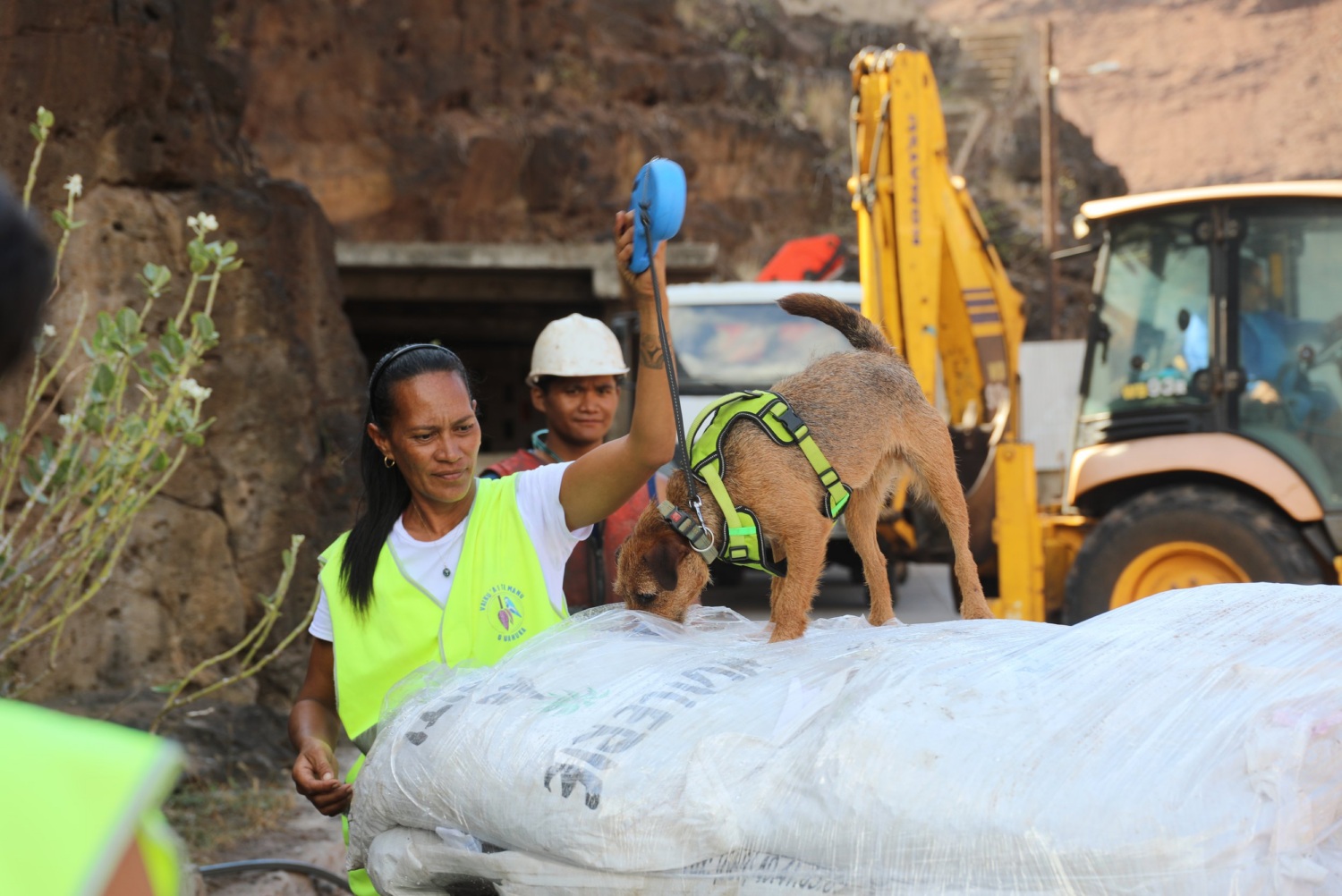
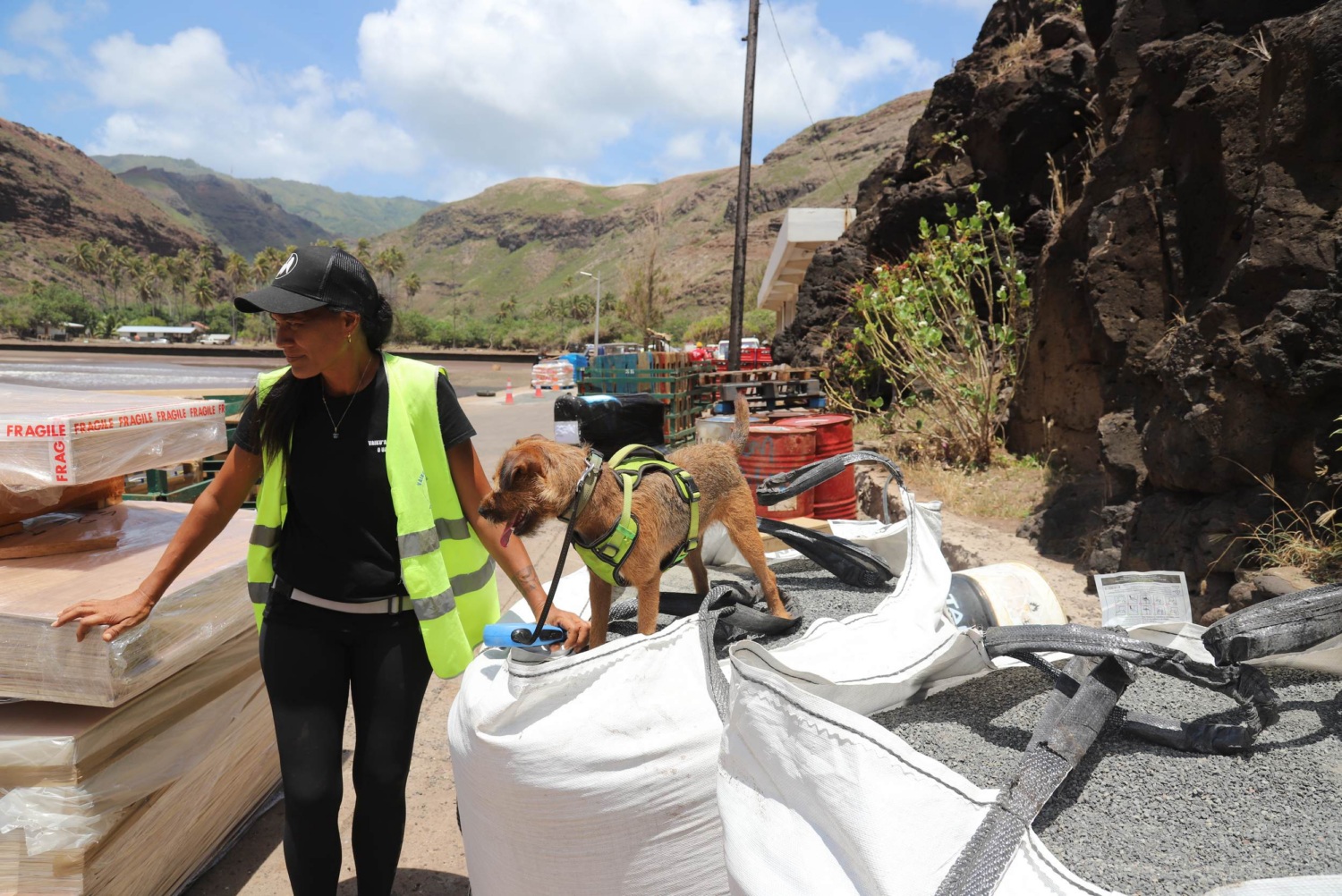
Since 2015 the association has run a canine biosecurity team. The dogs were trained in New Zealand at Wildlife Contractors NZ, a kennel certified by that country’s Ministry for Primary Industries. When a cargo ship docks at Vaipaee, a handler and a dog go through what comes off. Bait stations sit at the entry points. Snap traps placed around the island are checked every month: these are not to kill rats, but to prove there are none.
This work is both practical and deeply local. It depends on trained people who know the island, understand the movement of goods and vessels, and who are able to respond quickly if something is found.
Alongside the dogs, Vaiku’a controls invasive plants, runs awareness work with residents and visitors. Between 2021 and 2023 the group completed a reforestation project co-funded by the French Biodiversity Agency. That project did something useful beyond the trees it planted: it proved the association’s nursery and planting method works.
Home Planet Fund partner Vaiku’a i te manu o Ua Huka effectively uses the three pillars of biosecurity, education and community engagement.
With more funding, more habitat restoration will be possible. This will safeguard the endangered birds, local communities, and the flora of the island.
Vaiku’a has established a community-run model for the Marquesas. It is one of very few anywhere run by a community organization rather than a government agency. By strengthening what it is doing and sharing it, Vaiku’a will be set to assist in seeding a wider inter-island biosecurity network.
Working alongside Vaiku’a
Vaiku’a did not need Home Planet Fund to tell it what to do. It has already been doing this for over a dozen years, with dogs it trained, at a dock it knows well, and for birds its members grew up with.
What it needs is for the work to reach the second port.
Home Planet Fund is supporting that. We are not designing it, nor are we directing it. The people who know which ridge the Pihiti nests on are the people already doing this work.
Protecting Ua Huka means protecting much more than the two birds. It means caring for forests and water, supporting copra-producing families, sustaining Marquesan cultural identity, and strengthening a locally led model that could be replicated by other Pacific islands confronting invasive species.
Home Planet Fund is honored to work alongside Vaiku’a as it protects something increasingly rare: an island ecosystem that remains intact, and a future in which prevention is still possible.
FAPE – Te Ora Naho (Federation of Environmental Protection Associations of French Polynesia) A Ceremony, A Flower, and a Star Cluster
French Polynesia comprises 118 islands spread across two million square kilometres of ocean. FAPE – Te Ora Naho, is the federation that brings together around sixty environmental associations from across these islands and vast distances. Many of its members have never met each other.
Home Planet Fund is supporting FAPE with two grants that address the same underlying problem.
The Flower
On the Te Mehani Rahi plateau of Raʻiātea Island, Fred Jacq of the Tuihana Association knows exactly what needs to be done, as he has since 2006.
Half of the Raʻiātea’s entire native flora live atop the plateau, which is less than two percent of the area of the island. Of the 65 endemics assessed, 51 percent are threatened. Among those plants is the Tiare ’Apetahi, the emblem of Raiatea. It is found nowhere else on Earth. The flower has been legally protected since 1996, yet it has still declined by an estimated 95 percent in thirty years. Invasive shrubs are the main cause.
Fred has the botany, the maps, the GPS points, the permanent plots, and a three-phase strategy. What he lacks is continuity.
His work has been funded by the European Union through BESTlife 2030, but the new restoration zone turned out to be far more densely invaded than the initial survey suggested. In addition, the project has reached its funding ceiling.
That is the problem: the plant’s clock and the funder’s clock do not match, and the plant loses.
This is where Home Planet Fund comes in. We fill the gaps, to make sure the botany continues.
HPF is funding the 95 additional workdays needed to finish, along with monthly nursery monitoring that carries slow-growing Tiare ’Apetahi seedlings across to the next funding cycle. The seedlings grow just two centimeters annually, and need four to five years before they can survive planting. Most grants last three.
The Ceremony and The Star Cluster
Two hundred kilometres away, FAPE is working to mend the same fracture, but by a very different method. FAPE comprises sixty associations across a territory the size of Europe. Many have never met each other. The environmental challenges the islanders face are now growing faster than are attendable by currently available human, financial and organizational resources.
The time is now for the associations to unify as a coherent structure, so FAPE is gathering 100 of members in the Papenoo Valley and asking them to build something that outlasts the grant cycle: each other.
The rising of the Pleiades Star Cluster in late November opens Matari’i i ni’a, the Polynesian season of abundance: the coming months that traditionally bring rain, growth, and fish, as well as having always been a season of gathering.
During Matari’i i ni’a in 2026, FAPE will bring roughly a hundred people from its member associations into the Papenoo Valley for two days at Fare Hape, a cultural site held by the Haururu association. There is no internet. Everyone is present. The aim is clear: associations that have never worked together will now begin to do so. They will unify.
“The associations are being connected not only through their projects,” Aeata Richard told HPF. “But also through heart, spirituality, nature and culture.”
HPF is funding the connective tissue that keeps proper stewardship of the islands possible.
We are grateful to work alongside FAPE as it builds, what it calls, “a human infrastructure for the living world.”